
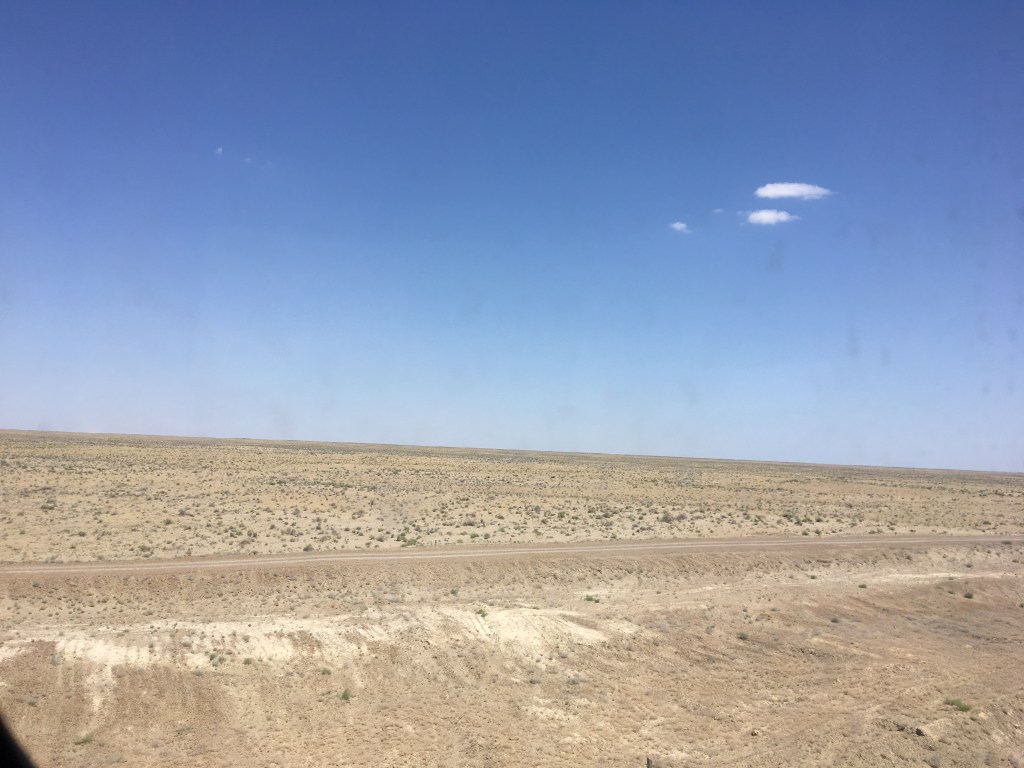
The journey from Khiva to Bukhara was a long six hour train journey across the desert. Despite most of the journey passing arid desert, we occasionally came across farming villages, which were once collective farms during the Soviet era. Unlike farming in most European countries, the fields were mostly cultivated by the hand of labourers. They were all heavily covered to avoid heavy sun exposure and a number of the workers waved at the passing train. The train was almost a Central Asian answer to the Hogwarts Express, with compartments and a man bringing jugs of green tea round the car.
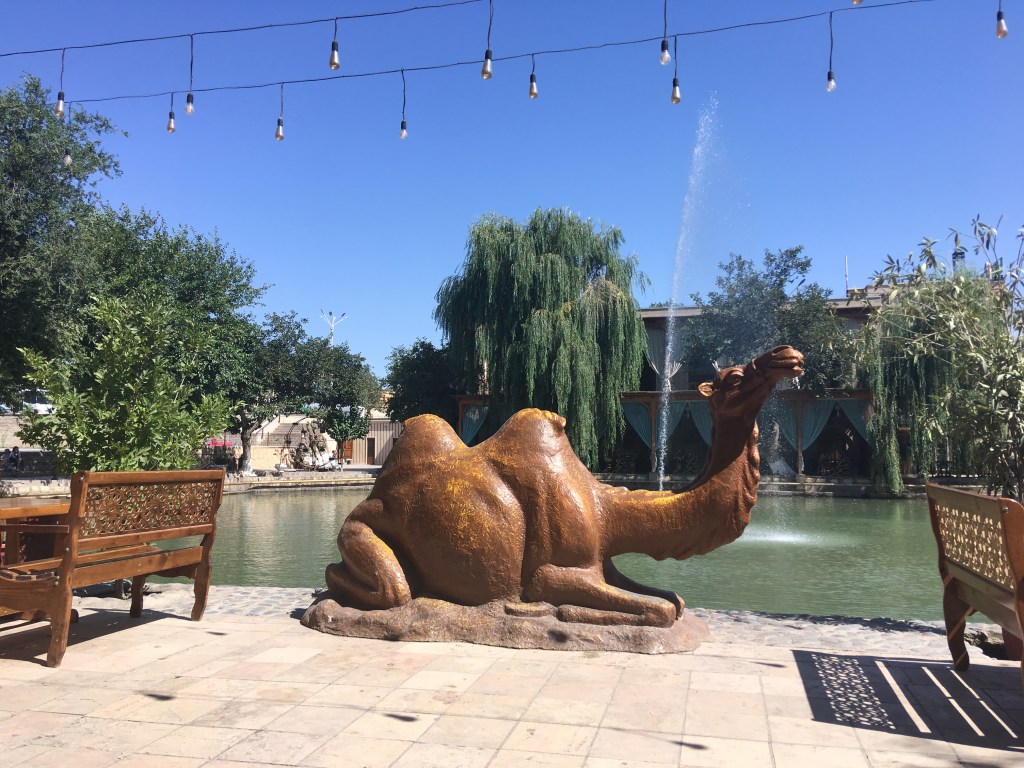
Once we arrived in Bukhara, we immediately got a sense of the local heat. Bukhara is renowned for being one off the hottest places in Uzbekistan and temperatures can hit 50ºC in the the summer. However, Bukhara has a large pond in the city centre with cafés which serve Coke Zero, a very rare commodity in Central Asia!
Bukhara is also well-known for its minority communities. Bukhara is home to a large number of Tajik people. Unlike the Uzbeks, the Tajiks are related to the Persians of Iran and the Tajik Language is very similar to Farsi, with the main difference being the scripts, with Tajik using Cyrillic script and Farsi using Arabic script. Bukhara As well as the Tajik people themselves, Bukhara’s Jewish population also speak Tajik. Although most of the population now live in Israel and the United States, Bukhara still has a Jewish quarter with an old synagogue.
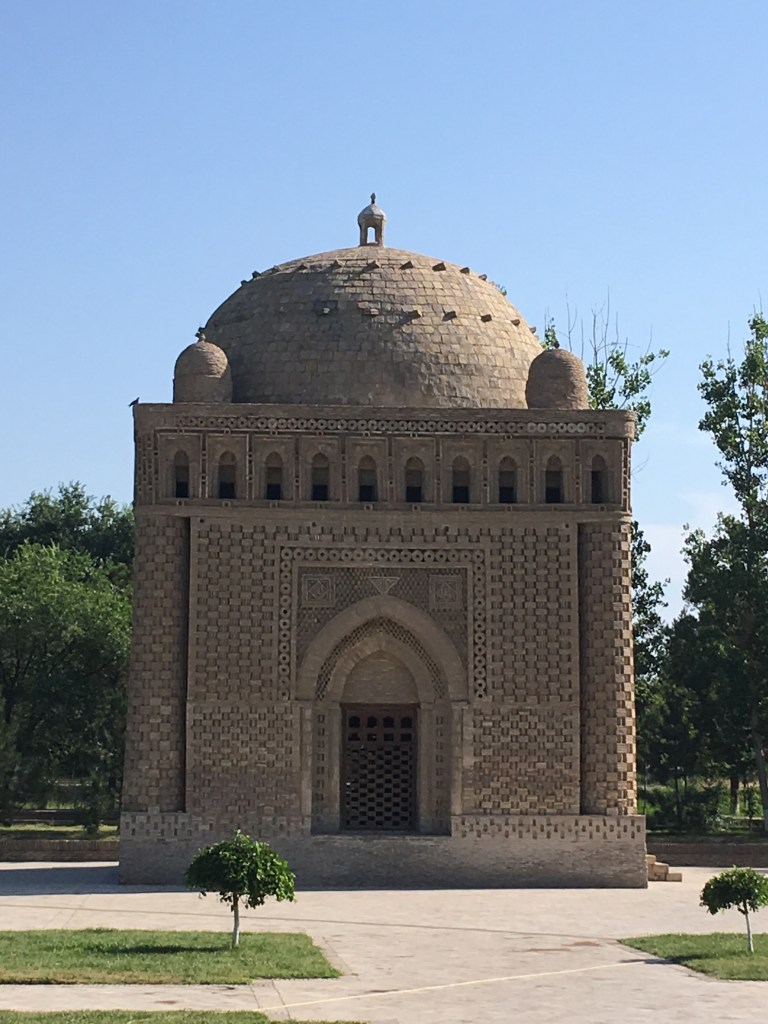
Bukhara’s Tajik Persian past is still visible today, an obvious example being the Samanid Mausoleum in the North-West of the city. Although the mausoleum is Islamic, it has been built in the design of a Zoroastrian fire temple, the pre-Islamic religion of Ancient Persia. The mausoleum was complete with elaborate carvings throughout the temple, including the windows.
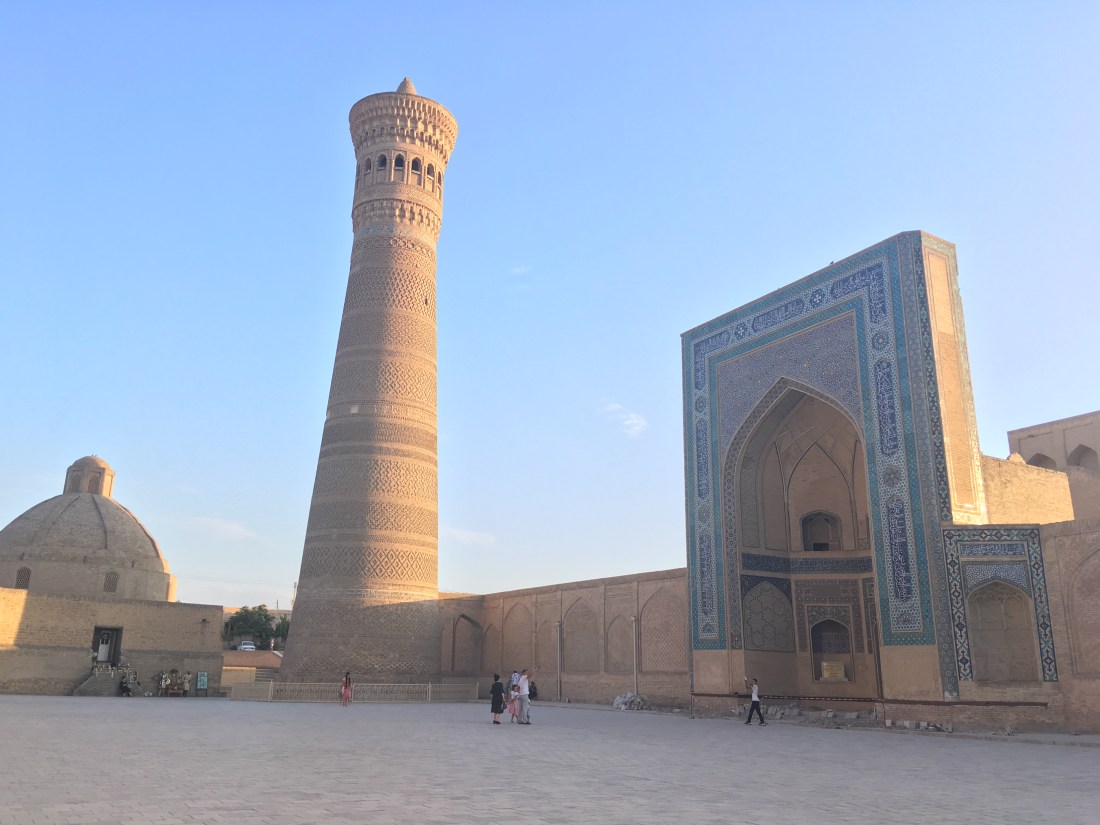
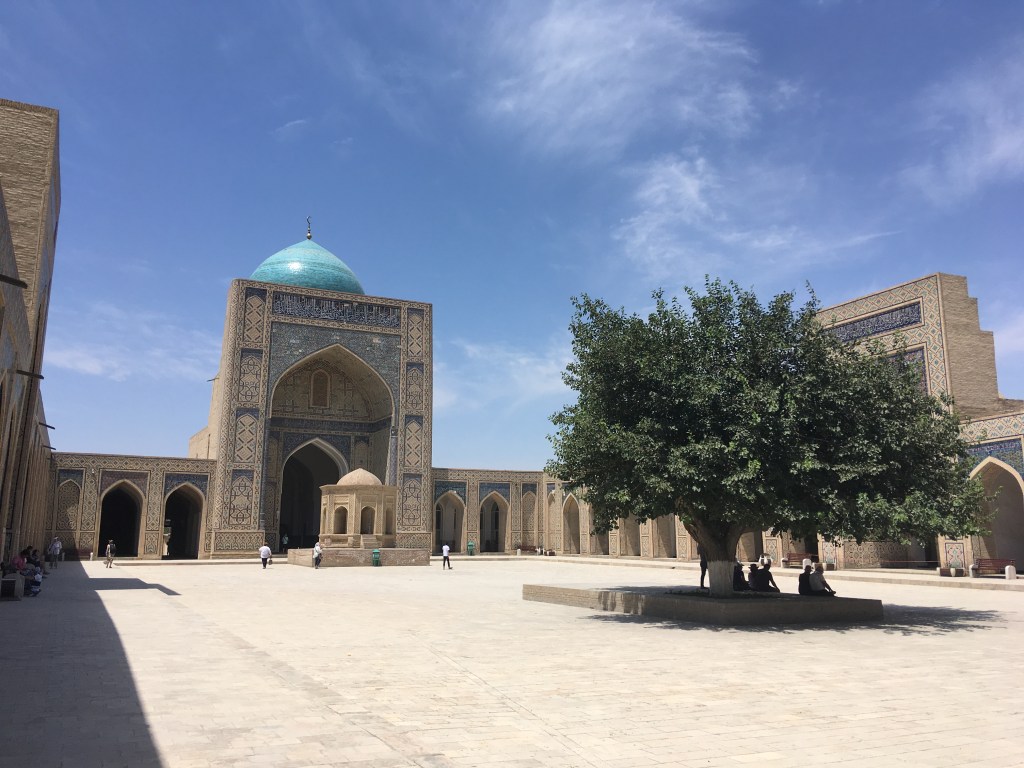
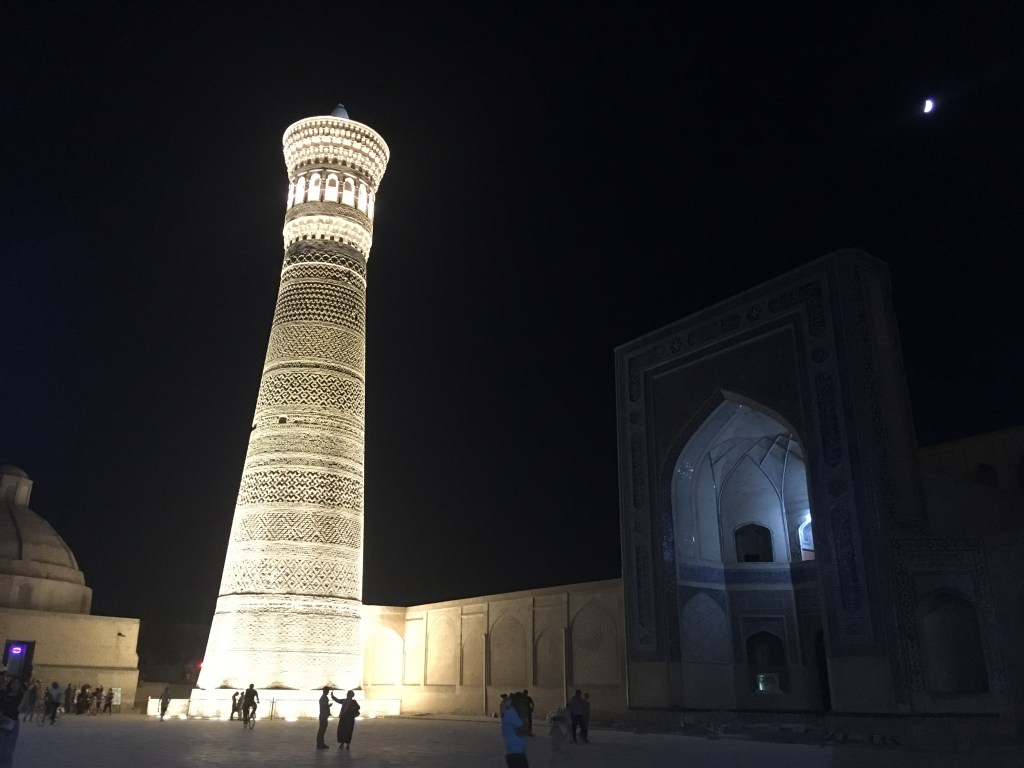
The main landmark of Bukhara without a doubt is the Kalyan minaret. The minaret was used not only to call Muslims to prayer, but also as a lookout post to warn if an attack on the city was imminent. As well as its towering statue, the engravings and calligraphy on the minaret are ornate.
Bukhara is also renowned for its production of rugs, particularly those with Turkmen patterns. Our guide brought us to a family-run rug factory that was located not far from the Kalyan complex to allow us to explore the different types of rugs made and how they were produced. The production of the rugs is extremely painstaking, with the workforce being made of young girls. This is due to the fineness of the patterns and due to the workers’ hands becoming bigger with age, weaving the rugs becomes much more difficult. Rugs can take anywhere between a few months to years, depending on the size of the rug and the workers use images to work out where each knot should be placed. Although these rugs are expensive, it is not difficult to see why considering the dexterity, ornateness and artistic nature of their production.
One memory I have of Bukhara is when I needed to go the pharmacy, due to a wisdom tooth coming through. As I had nothing with me that would help, I decided to brave it and go to the pharmacy, known as ‘Dorixona’ in Uzbek (one of the few Uzbek words I remember) and ‘Аптека’ (Aptyeka) in Russian. Luckily, my Russian phrasebook that I brought with me had a health section in it, so decided to ask the person over the counter in broken Russian for some teething gel. Luckily, an elderly Russian ‘babushka’ knew what I was asking for and helped the man behind the counter and I ended up with a tube of Russian teething gel. The gel worked wonders and I was fine the next morning! It also gave me huge confidence to speak more Russian throughout the trip.
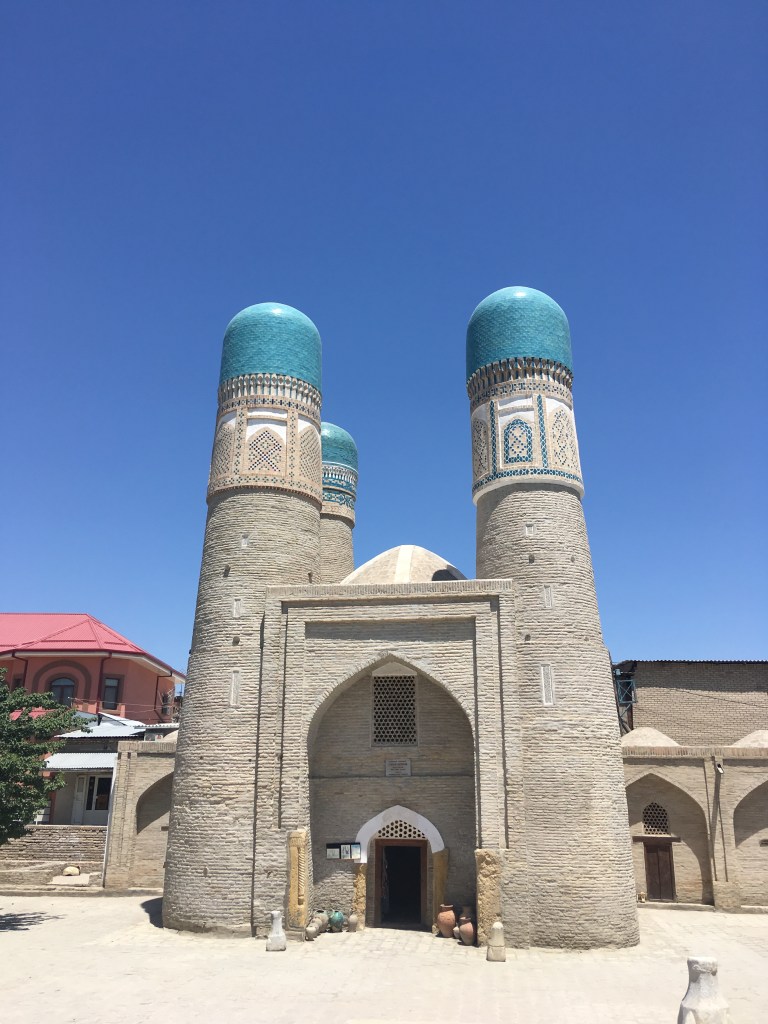
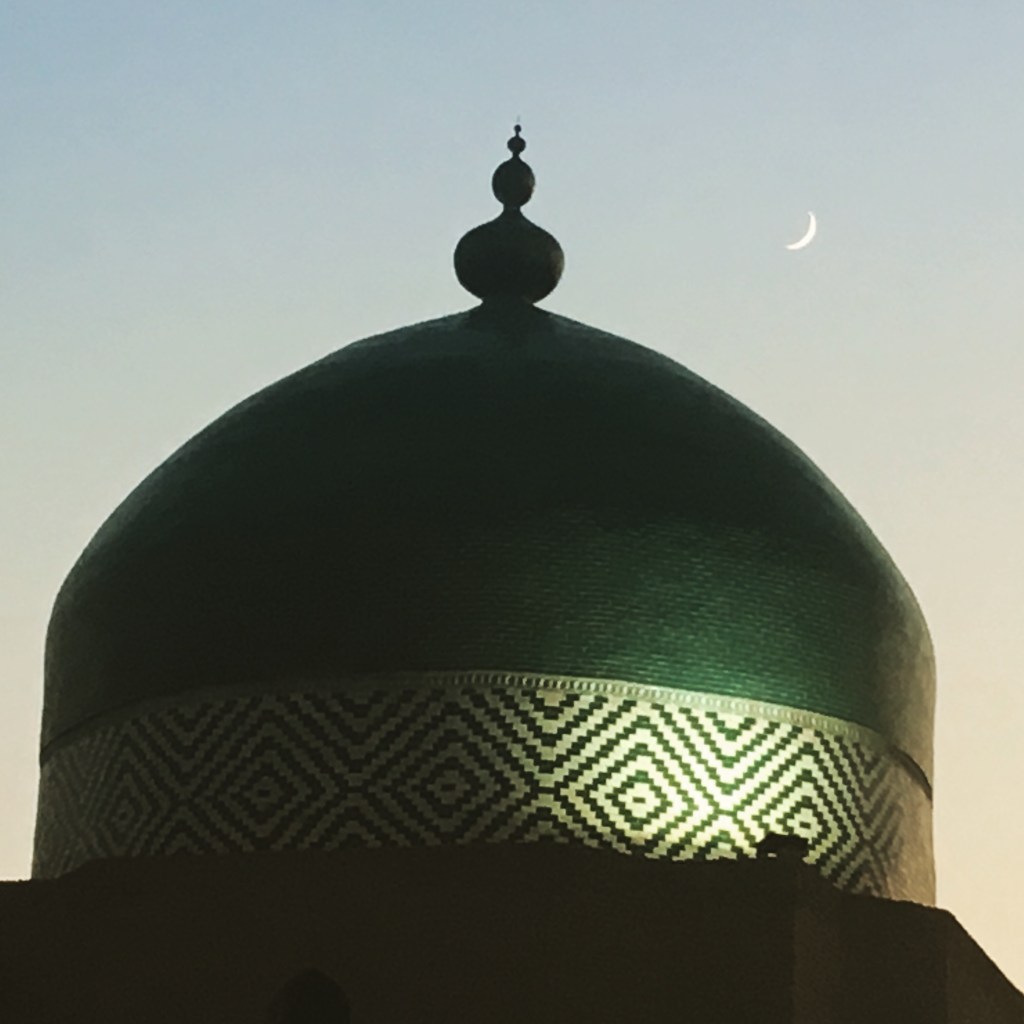
On the way to the station to catch the train to Samarkand, we had time to see the Char Minar Madrasah. The name ‘Char Minar’ means ‘four minarets’ in Persian/Tajik and the building resembles a mosque. Although the minarets are not used and cannot be accessed, it is possible to go onto the roof and explore the motifs of the minarets and dome, some of which resemble Zoroastrian, Buddhist and Christian designs.

 Hugh's Voyages and Discoveries