
After spending time in Tashkent, we took a domestic flight to Urgench, on the other side of the country. The domestic airport in Tashkent was small but I loved the 1960s feel, which felt like airports in the Sean Connery-era James Bond films.
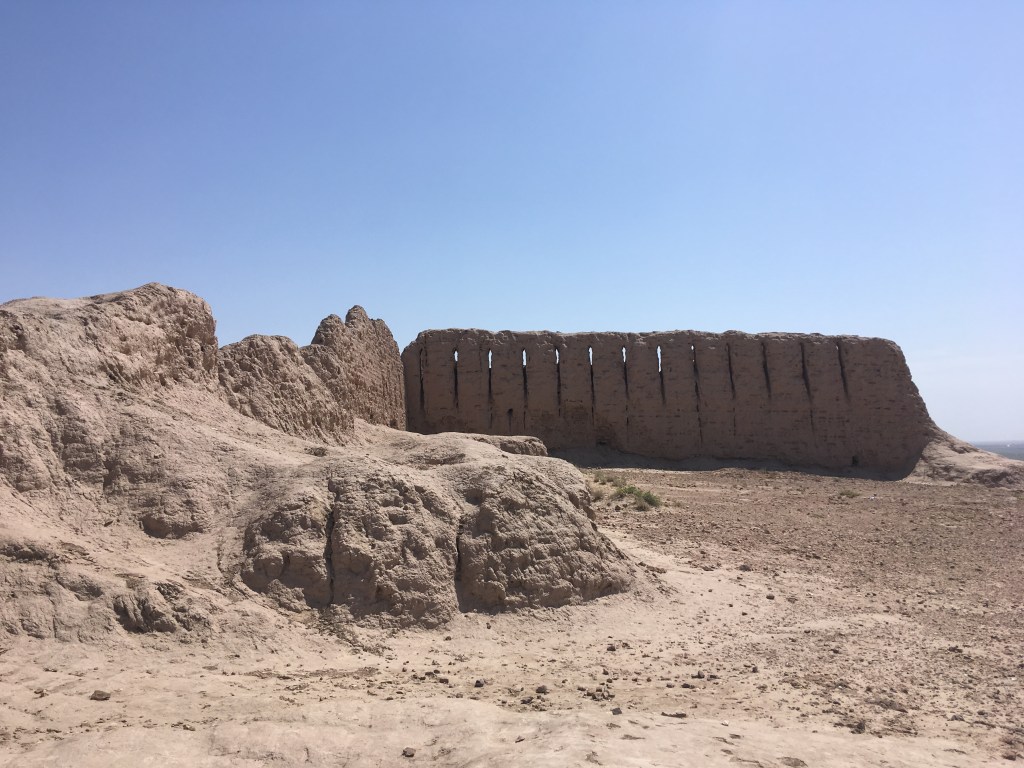
After arriving in Urgench and driving through some bumpy roads, we explored the ruins of an ancient fort. The fort is thought to be so old that it dates back to the time when Zoroastrianism was the predominant religion, predating Islam. We also passed through the Autonomous Republic of Karakalpakstan. Although mostly barren, it is home to the Karakalpak people. They have their own language which despite Karakalpakstan being in Uzbekistan, shares more similarities with Kazakh.
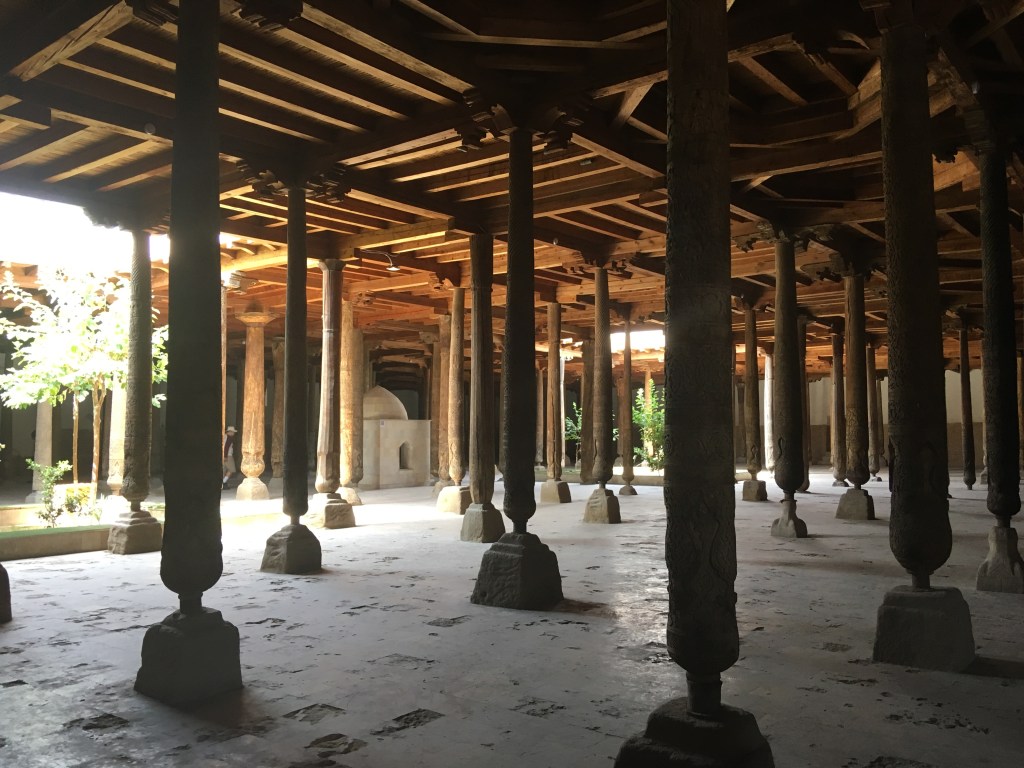
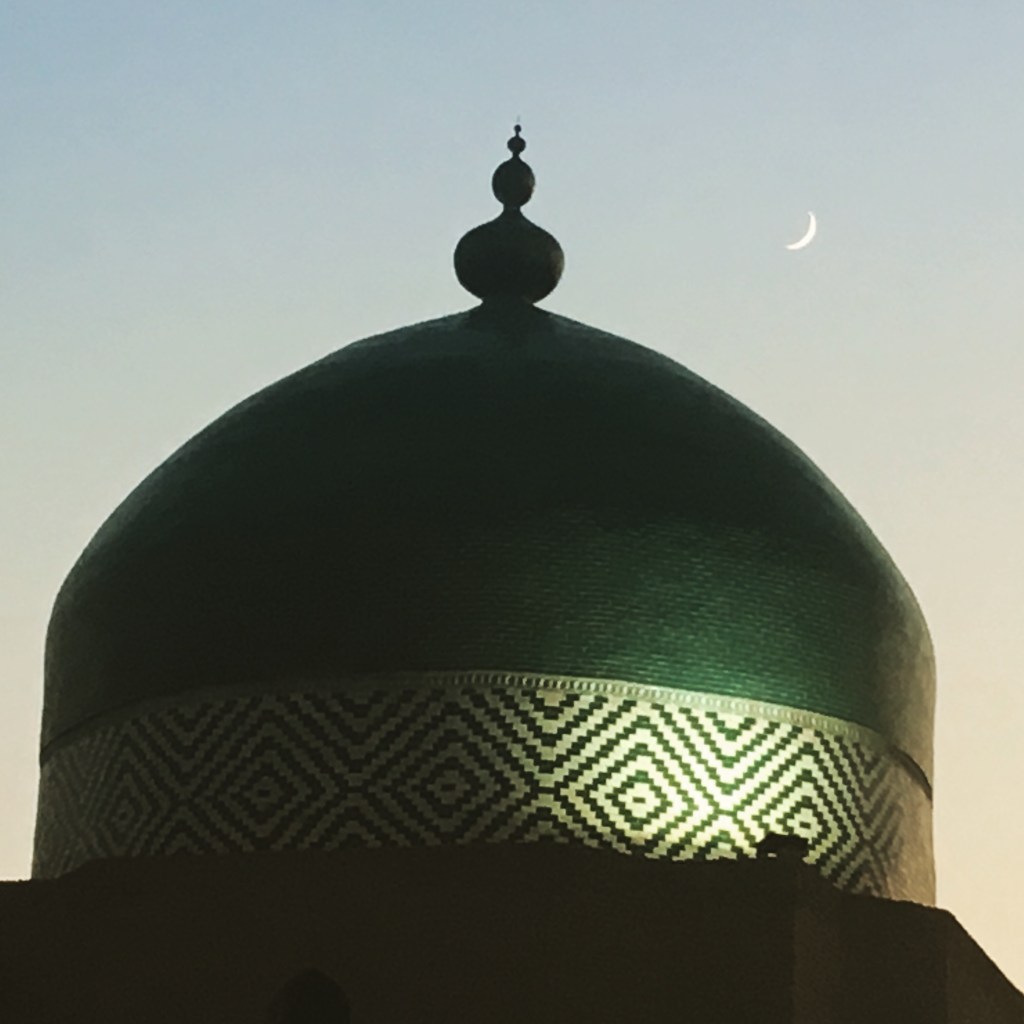
Eventually, we arrived at our next destination, Khiva. Although Khiva is a city of nearly 90,000 people, it is best known for Itchen Kala, an ancient citadel which is also a UNESCO World Heritage Site. Once inside the imposing city walls of Itchen Kala, it feels as if you are in a massive outdoor museum or a real-life Aladdin set. There are no cars, which added to the ancient feel of the city. Khiva is home to a number of mosques including the Juma Mosque, which is known for its forest of carved wooden pillars and being the place where Genghis Khan stabled his horses during his stay in the city.
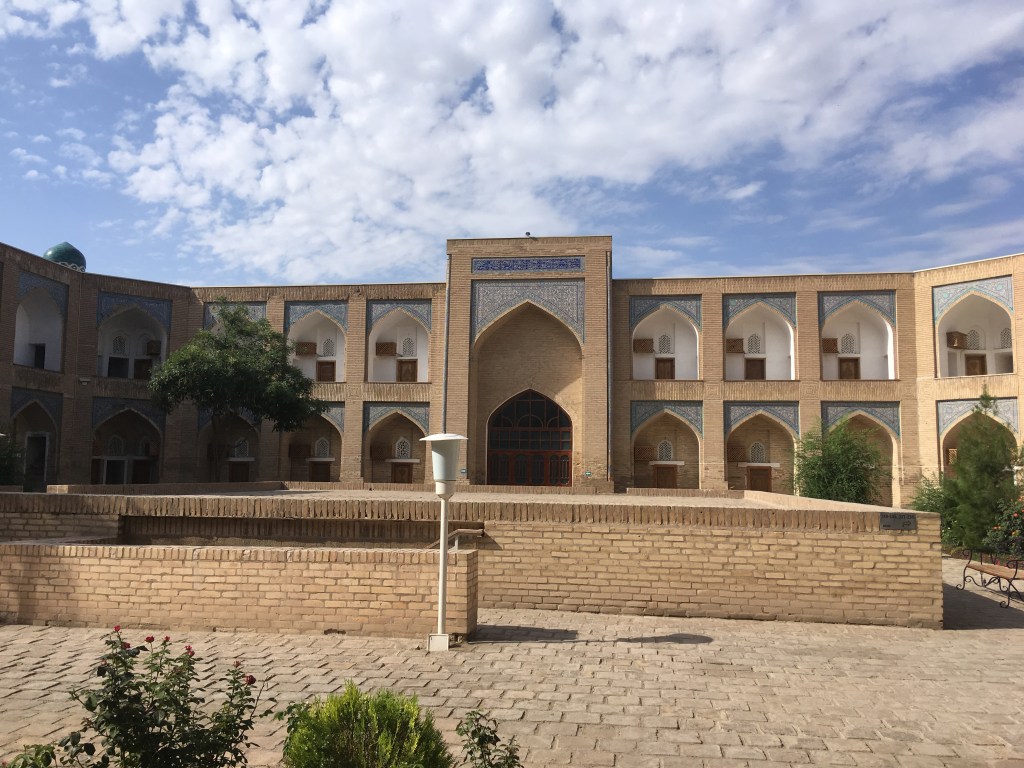
Itchen Kala has two main madrasahs (Islamic schools), the Mohammed Amin Khan Madrasah and the Mohammed Rakhim Khan Madrasah, the former of which has been converted into a luxury hotel. Both these madrasahs are elaborately decorated and were important in educating the next generation in the ways of the prophet and the Qur’an.
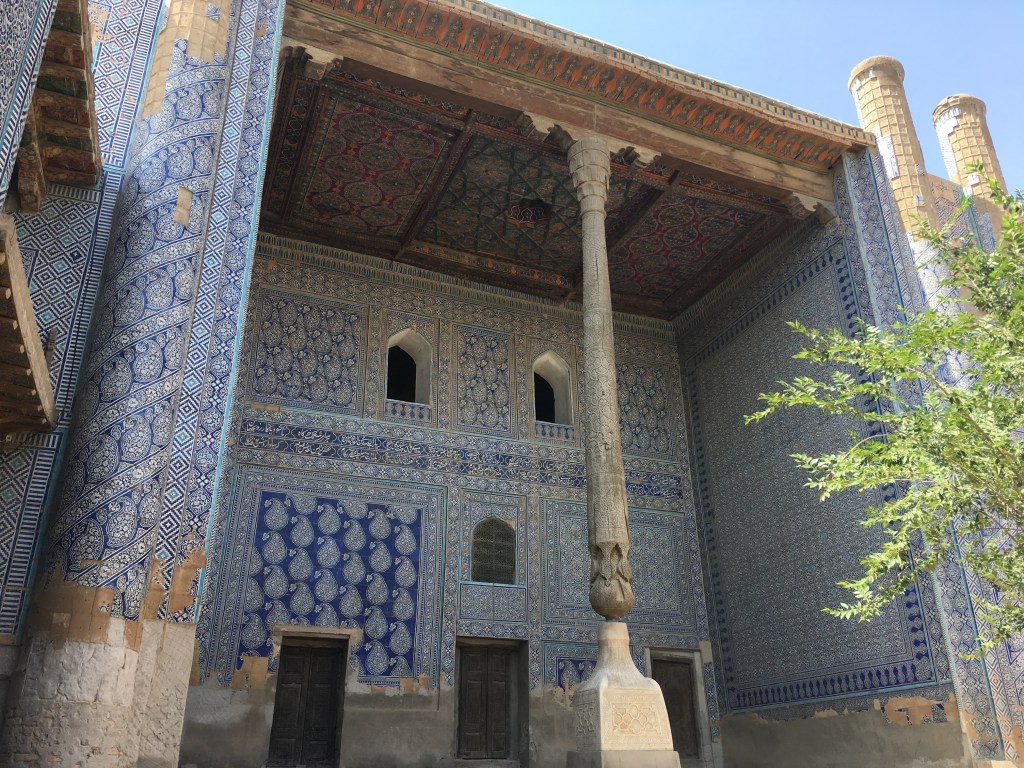
As well as being a city, Khiva was once an khanate or kingdom. The Khan of Khiva once lived in the Tosh-Khovli palace, which as well a court as well as a palace. The Khan used to pass judgements on the crimes and return through one of three doors to indicate whether the defend was to be executed, incarcerated or freed. The palace was also home to the Khan’s many wives and concubines. Each woman had their own rooms and only the Khan knew the secret passageway to their living quarters, through a secret tunnel.
Aside from the beautiful ancient buildings, Khiva was also the first place I tried Uzbekistan’s national dish, Plov. It is a filling dish, consisting of rice, meat and vegetables and goes very well with a pot of green tea afterwards! Green tea is a popular summer drink in Uzbekistan and is often drunk out of small traditional tea bowls. Despite being a hot beverage, it is effective at cooling one down during the hot summer months.
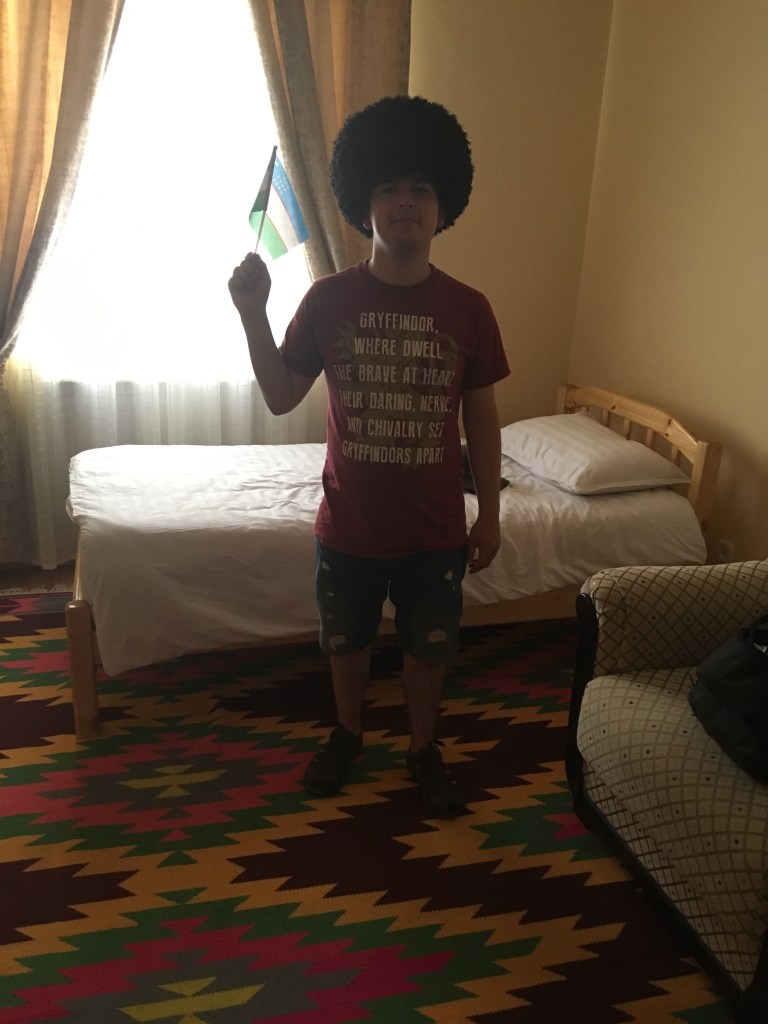
Throughout the streets of Khiva, there are various stalls selling traditional wooly hats, called Chugirmas. Although these hats are mostly made across the border in Turkmenistan due to the city’s close proximity to the border, they have also been traditionally worn in Khiva and the surrounding Khorezm Region. They have practically uses, as they keep the wearer as warm in the winter and cool in the summer. It was also used by travellers as a pillow whilst sleeping, due the hat’s soft, wooly texture.
After our fascinating stay in Khiva, we boarded an six-hour train eastwards across the desert to Bukhara.
 Hugh's Voyages and Discoveries
This place looks awesome, I’d love to go! Thanks for sharing. Greetings from London.
LikeLike