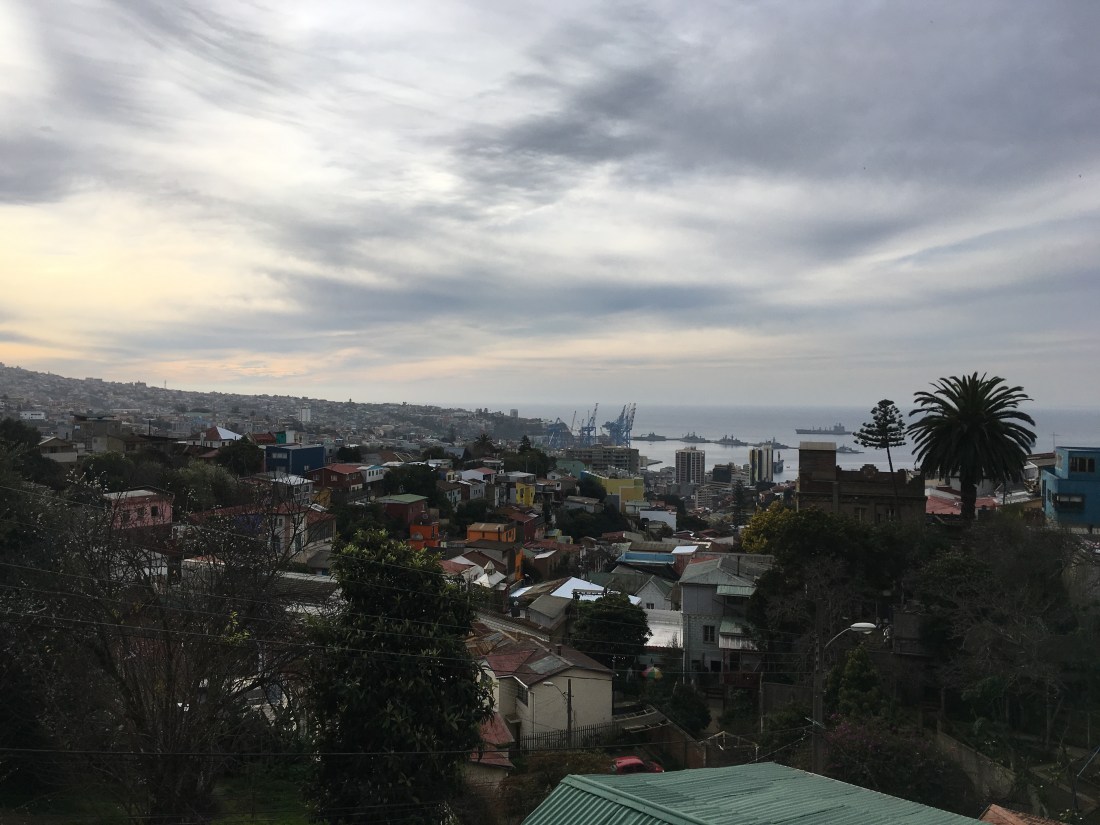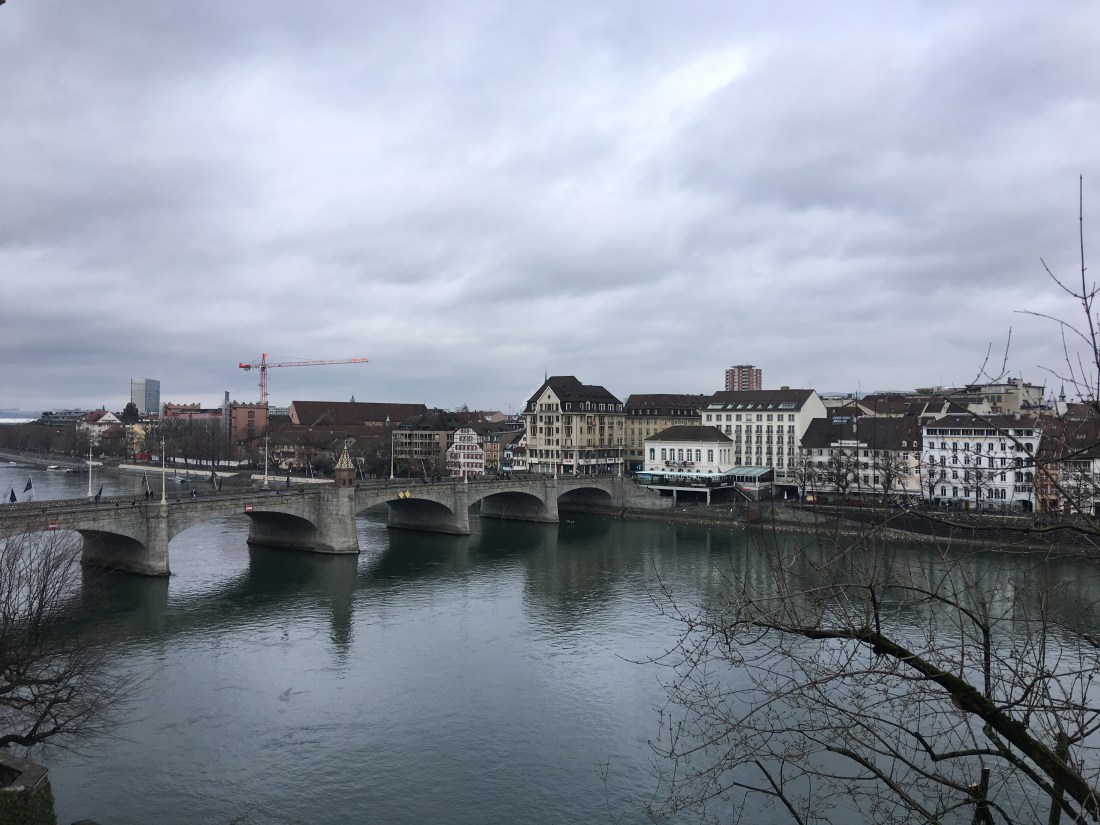
Grüezi aus Basel!

One of the things that I love most about living in Mulhouse is the ability to travel to a plethora of different places within easy reach by train. Due to Mulhouse’s location on the border, as well as places in France, Germany and Switzerland are both easily accessible. Therefore I have made the most of this situation and went to Basel, Switzerland for the day.

The train to Basel from Mulhouse takes about 20 minutes and feels like a shuttle train. Although Basel is one of Switzerland’s biggest cities, it is smaller than both Edinburgh and Viña del Mar. This, however, means that the city is very walkable and the Altstadt (Old Town) and Marktplatz are within walking distance of the train station. The Rathaus (town hall) in Basel is a beautiful building, with historic paintings and murals on the walls. A busker is always present in the cloister and at one time, a cellist was playing The Swan by Camille Saint-Saëns, one of my favourite pieces. Like all of Switzerland, prices in Basel are fairly expensive. The Marktplatz however is home to a number of stalls selling traditional Swiss food at reasonable prices. I ate a Baseler Wurst, a traditional sausage from the area, which was served with a slice of rye bread and hot mustard.

One funny moment happened when a lady heard me talking to my friend Danielle and came up to me in English and asked if I was American. I initally thought her accent was Swiss as her accent was not Anglophone and her granddaughter and her Dad were speaking in German to each other. I responded by saying, ‘Nein, Mein Freund ist Amerikaner aber Ich komme aus Schottland.’ (No, my friend is American but I’m from Scotland). The lady looked most perplexed and I was beginning to think I had said something odd. It turned out that she and her husband had come from Wisconsin, U.S.A. to visit their daughter and family who lived in Basel. Luckily, the lady’s daughter spoke German so was able to translate!

Basel is a very nice city and I hope to be back several times before I finish my placement, particularly as there is a Lindt shop in Basel!
Isla Negra, Eugenics Debate and Strikes

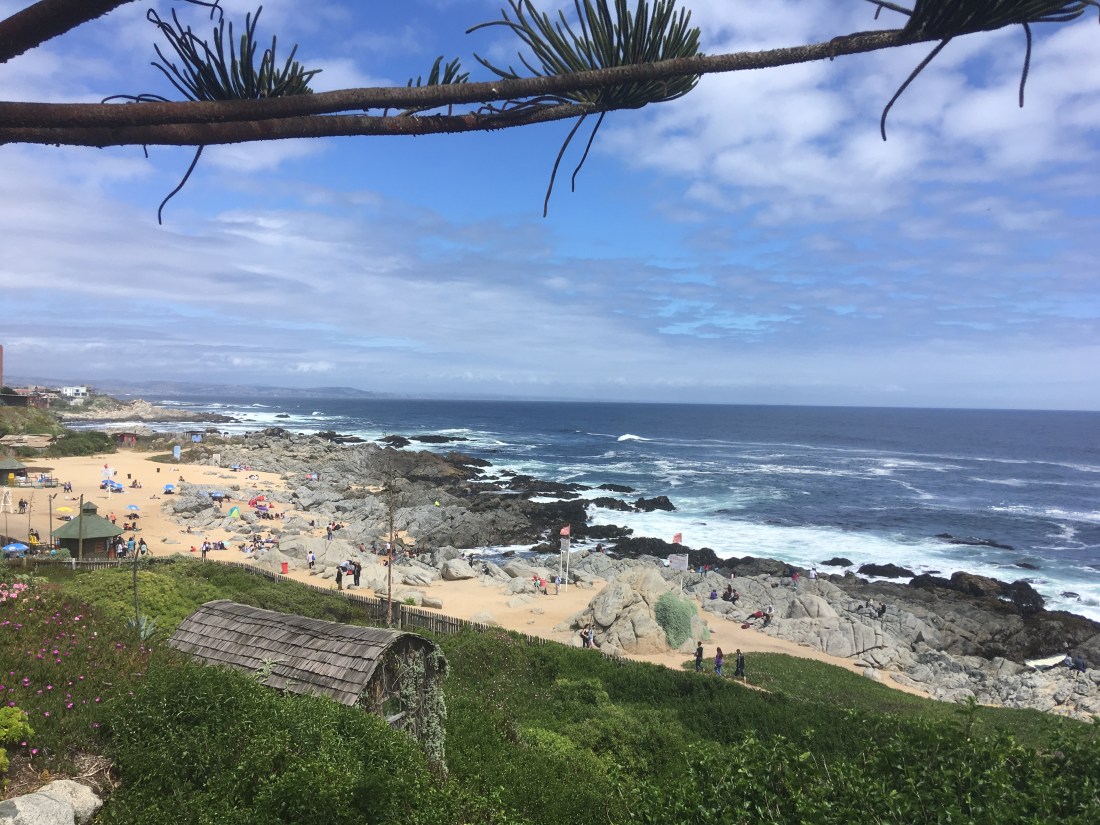
At a loose end one weekend, the three of us decided to complete the trio of Pablo Neruda’s houses by visiting his favourite house in Isla Negra. The house is located in a town which shares the same name and is very popular with tourists, particularly from other parts of Chile and is located about an hour and a half away from Valparaíso.

The house was all on one floor, but very spread out and spacious. The best part about Neruda’s house however was the amazing view out over the ocean, beaches and waves crashing on the rocks. When we arrived at the house, we were greeted by a Spanish speaking guide who when we said we were from Scotland, she responded in perfect English. It later transpired that she was an Australian who after a gap year in Chile had decided to return and call the country home. After visiting the house, we later went to eat some of the area’s amazing seafood, before taking the bus back to Valpo.

One of my hardest subjects or ‘ramos’ in Chile is Lengua Española (Spanish Language). Although it is for native speakers, I take it due to the fact that I believe it will be very useful for the fourth-year dissertation, as some of it will be written in Spanish. Our most recent assessment was a debate on Eugenics, also known as Human Genetic Modification. I was slightly worried when I heard the topic as I did not know much about it, even in English! However, we were split into groups for the task and the Chileans in my group were all very helpful. The debate was slightly different to debates in Scotland. as each team has two or three people arguing their case and the others are either rebutting the opposing side’s arguments. Each team also has a moderator who introduces and summarises the main points of each side of the debate. I was one of the people arguing against Eugenics, however we had to prepare both sides of the debate as we only found out on the day whether we were for or against the motion. Our team did well and we got a 5.6 (roughly equivalent to a B/B+).

Before we set off for Chile, one of the lecturers who is very familiar with Chile said that strikes and student protests were very commonplace. Until now, we had not had any strikes and classes went on as normal. However as a result of conflict between the native Mapuche and security forces, the students voted to go on two separate strikes which has led to the cancellation of classes!

Mi Buenos Aires Querido

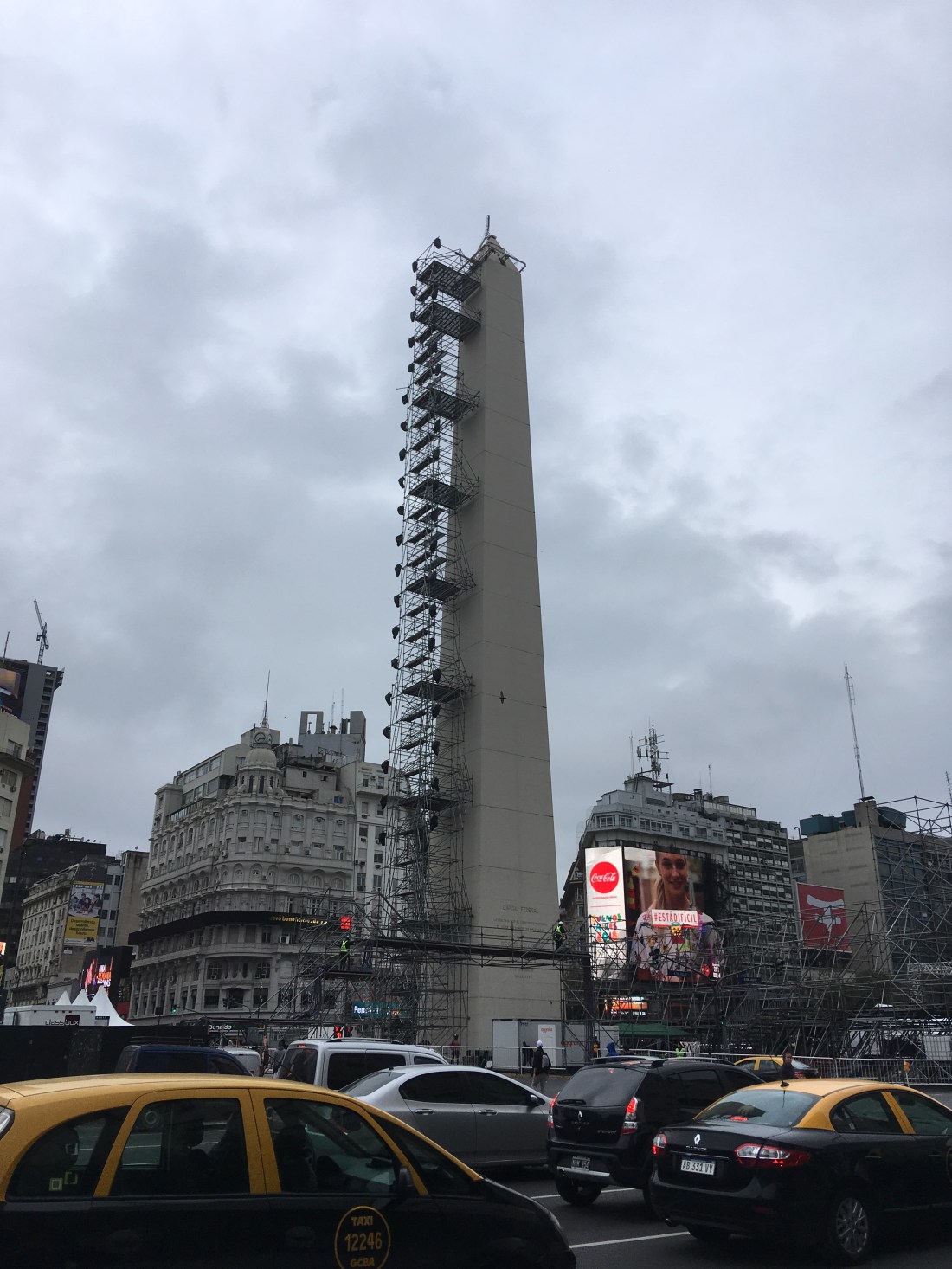
For the last weekend of September, my classmates Holly, Charlotte and I took a plane across the to the other side of the Andes to Buenos Aires, Argentina.

We arrived in Buenos Aires in the evening after a turbulent flight. The thunder and lightning reminded me of the scene in Harry Potter and the Deathly Hallows when the Order of the Phoenix were transporting Harry to the Burrow. Once we arrived at Ezeiza Airport, we took a taxi to our hostel which was located in the Palermo District of Buenos Aires. The hostel was nice and was more like as all the rooms were privates and breakfast was free. After we arrived, we went to a bar and restaurant in Palermo where I pint of beer was an amazing $70 Argentinean Pesos (£1.50/$2.00 USD)!

The next morning we were woken up by one of the heaviest storms I have ever seen in my life. It was a humid day with thunder and lightning and the rain bouncing off the pavements. Our first trip of the day was to the ticket office to buy our tickets to the Argentina vs New Zealand rugby match. After drying off, we then went to the Evita Museum where we learned about the life of former Argentinean President Eva Perón.

Later, we took a trip on the metro to the El Ateneo, the biggest bookshop in the world. As well as the sheer number of books, the architecture in the building was grand as the building was once a theatre. Some of the artwork on the ceiling resembled that of the Sistine Chapel in Rome. Before going to the rugby match, we went for a pizza at one of Buenos Aires’ many pizzerias. Pizza in Buenos Aires has a very good reputation as a result of high Italian immigration to Argentina and to this day the majority of Argentineans have at least one Italian ancestor. After enjoying the pizza went to a 45- minute bus trip to Liniers to watch the rugby.

The next morning we went a tour round some of the main sights in Buenos Aires. Thanks to the amazing public transport and SUBE cards that you can use between people, we were able to see quite a few things in one day. Our first port of call was the Sunday market at San Telmo, which had various articles such as souvenirs, antiques and sports merchandise. Afterwards, we took the metro to the La Boca, a colourful neighbourhood decorated with murals and home of Boca Juniors, one of the most successful South American football teams with ex-players including Diego Maradona. We witnessed first hand the religiosity of Argentinean football when due to Boca Juniors playing at home, the whole neighbourhood went into shut-down so everyone could attend the match at La Bombonera.

We then went to Plaza de Mayo which lies next to La Casa Rosada, the residence of the President of Argentina. The square is often a flashpoint where demonstrations take place and crowds also gather to listen to the president.

In the evening, we went to a restaurant to try some local Argentinean steaks. At the restaurant we went to, we got a discount as we arrived early and if promised to vacate the table by eight o’clock. However, we had to wait a while for the food to come out so as a result, the staff made up for the delay by allowing us to stay for as long as we liked and by giving us free champagne and lollipops! The steaks and wine we had were amazing and the steaks were an enormous 700g!

Going to Buenos Aires was an amazing experience and it was such a fascinating and charming city. I will definitely add it to the list of places to return to in the future. I even picked up the Argentinean accent I liked it so much!


¡Felices Fiestas Patrias!

First and foremost, I would like to apologize for the lack of uploading recently! I have been super busy with tests and sorting out documentation.

All over Chile, celebrations for Fiestas Patrias are officially underway. Fiestas Patrias is when Chile celebrates its independence from Spain in 1810. Although festivities begin one or two weeks in advance, the two main days of the holiday being the 18th and 19th of September. The 18th commemorates Chile’s proclamation of independence whilst the 19th commemorates Chile’s Armed Forces. It is widely viewed as the biggest holiday in Chile and many Chileans travel back home to be with friends and family. Homes and businesses are usually decorated in red, white and blue and by law must have a Chilean flag visible outside, with fines in place for those who do not. However, this law is often not enforced.

A common place for Chilean’s to spend time during Fiestas Patrias is at La Fonda, outdoor venues where Chileans relax and enjoy local music, food and drink and Cueca. Cueca is the national dance of Chile which involves women dressing up in traditional flowery dresses and men wearing boots, ponchos and wide-brim hats. The couples do not have physical contact with one another, but instead wave a white handkerchief or rag. I got to experience Cueca at La Fonda organised by the university on the Friday. Despite the dances being very different, it reminded me of Country Dancing in Scotland.

During Fiestas Patrias and at Fondas, Chileans generally consume local food and beverages. The most common foods include empanadas, completos (Chilean hot dogs) and meat on skewers known as ‘Anticuchos’. In terms of drink, Chileans drink beer and wine, but also spirits, most notably Pisco, a spirit drink made from distilling fermented grape juice. It is most commonly mixed with Coca-Cola, together known as a ‘Piscola’. The most infamous drink however is known as a ‘Terremoto’, Spanish for earthquake. Terremotos are made from Pipeño, a type of low-grade wine, grenadine, fernet and pineapple ice cream. They are notoriously strong and are not for the faint hearted nor the fast drinker. They are so popular that McDonalds has brought out a Terremoto-flavoured sundae for Fiestas Patrias.

However aside from Terremoto the drink, I have also been experiencing a few literal terremotos. In Chile, tremours happen frequently and although the can seem frightenening at first, it is part of everyday life as Chile lies right next to a fault line and is part of the ‘Pacific Ring of Fire’. Since arriving in Chile, I have experienced four tremours, one of which happened during a class at university. However no one stopped what they were doing and laughed about it afterwards.

Felices Fiestas Patrias to all those celebrating!

A Weekend in Santiago

Last weekend, four of us went to Santiago for the weekend, taking the bus from Viña del Mar and coming back on the Sunday.

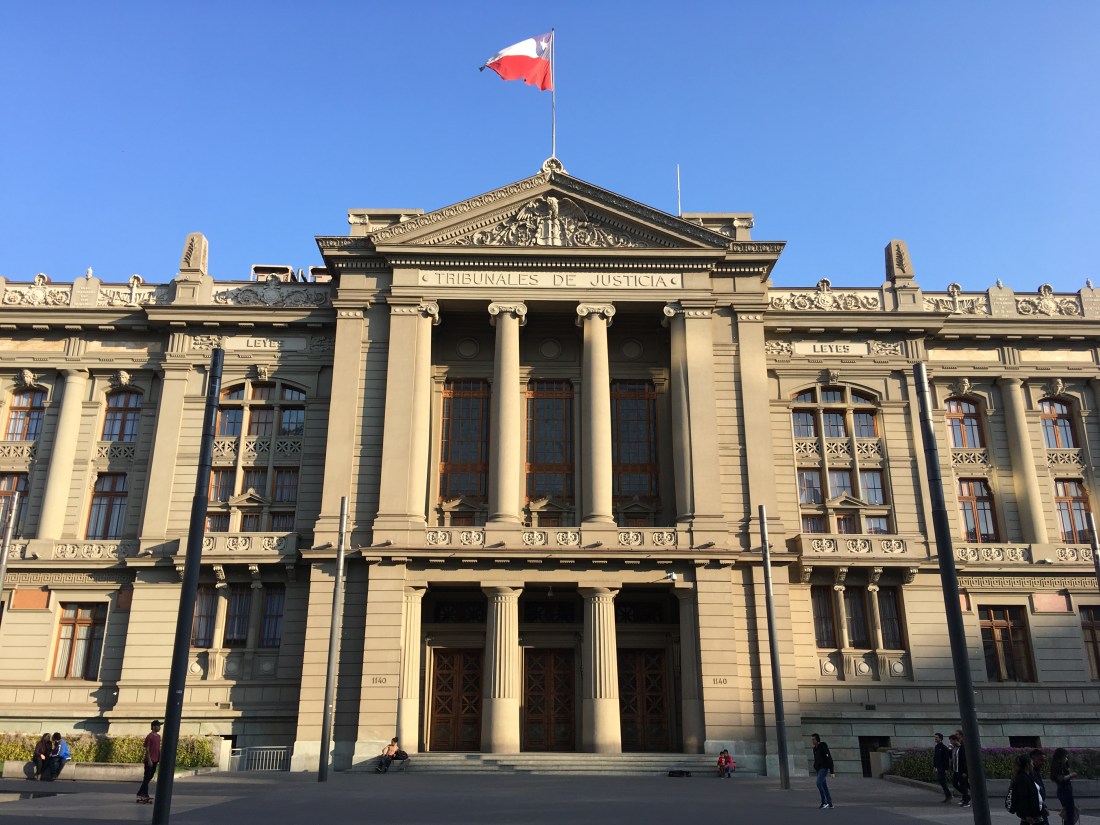
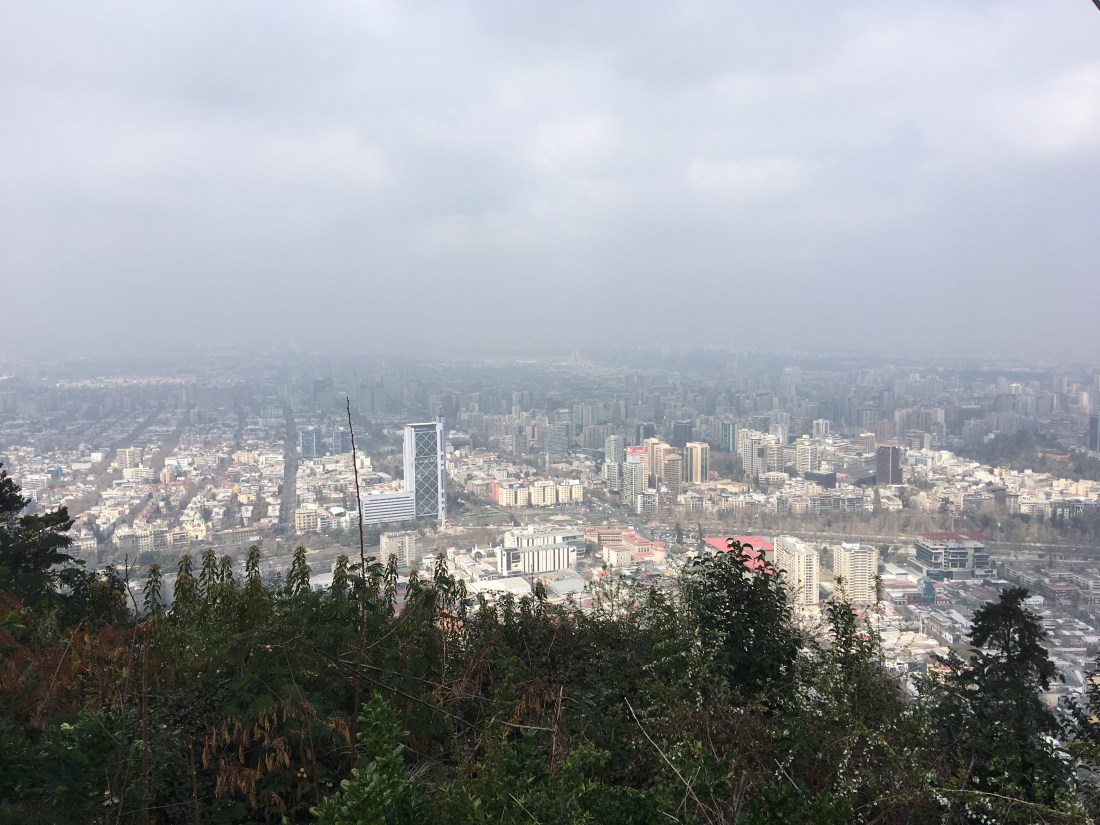
The day started early at 08:30 when we all met at Viña del Mar Bus Terminal and set off for Santiago. The bus took a little longer than expected, taking two hours instead of the projected hour and a half, we slept most of the way. After taking an erratically driven taxi from the bus station in Central Santiago, we arrived at Cerro San Cristobal for some fantastic views of the city. We took the cable car up the hill and took the funicular railway back down, both offering different views of the city. Once up the hill, we realised just how vast and expansive Santiago is, with the city stretching to as far as the eye could see. At the top of the hill, there is a statue of the Virgin Mary with a chapel inside, which reminded me of Christ the Redeemer in Rio de Janeiro.

After taking the funicular back down, we arrived at our hostel which was very nice as we had our own private room with two bunks beds, the room looking like the set for an Ikea advert. I was on the top bunk however, which did not have boards at the side to stop you falling off so I was very thankful there was not an earthquake during the night! Arguably the best thing about the room was that there was heating, a rare occurence in Chilean accommodation.

After checking in at our hostel, we went to a market to eat some seafood. After an injury sustained by one of our group due to an uncovered manhole, we decided to return to the hostel and enjoy our free bottle of wine on the terrace at the hostel. However on the way back to our hostel, we had to dodge a slightly awkward situation when in the middle of one Santiago pedestrianised shopping streets, an elderly woman threw a chair at a man in the street.

The next morning, we set off and went to Pablo Neruda’s Santiago residence, La Chascona. It was a little different to his house in Valpo, with the house in Santiago being more spacious and with more places to enjoy the nice weather. However, I preferred his house in Valpo as the house in Santiago did not offer any good views like his house in Valpo which overlooks the sea.

Our next port of call was the Human Rights Museum in Santiago. The museum told the story of the 1973 Chilean Coup d’État and the crimes committed by Pinochet’s regime up until its collapse in 1990. The most harrowing part of the entire museum was on the top floor, where all the faces of the victims of the regime on the wall, making you realise that the victims of the regime weren’t just numbers, but real people.

Before taking the bus back to Viña, we decided to go to a seafood restaurant near the Museum which was recommended to us by one of our taxi drivers. The restaurant was by far one of the most bizarre, yet wonderful, restaurants I have ever been to in my life. The entire restaurant had a maritime/naval theme, with decorations including naval memorabilia from Chile and around the world to a whale’s skeleton on the ceiling and the waiters dressed in naval uniforms. The food was some of the best seafood I have ever tasted and it was a great way to round off a successful trip to the capital.


Palín

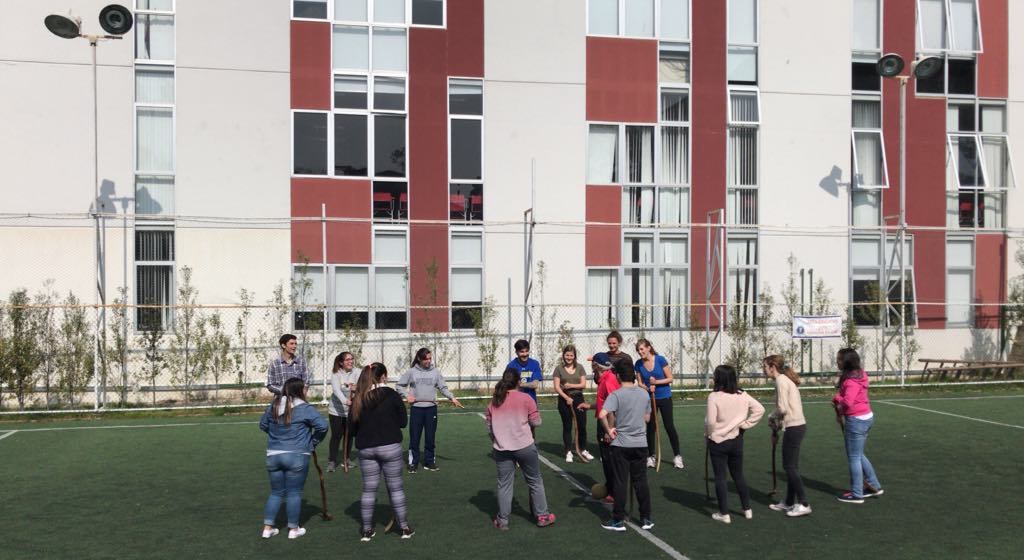
This week we had our first practical class for Mapuche Games, which took place on the university pitch in Viña del Mar. There, we were introduced to the game of Palín.

Palín is one of the games played by the Mapuche in order to settle disputes between tribes. It is widely regarded as one of the pillars of Mapuche culture and much of the terminology used in class is in Mapudungun, the language of the Mapuche. The sport is similar to hockey and shinty and is played with a stick called a ‘weño’ and a ball called a ‘palí’. Teams normally consist of about fifteen players each side and both teams try to take the palí to the other end in order to score a ‘tripay’. The pitch is rectangular and is called a ‘palíwe’.

Unlike most sports such as hockey and shinty, in palín, players begin the match facing each other horizontally in a line across the pitch. A player’s opposite number is called ‘kon’ and they are supposed to be mindful of their opposite number’s family. The game begins when the two captains (always the players in the middle of the line) come out and touch palís four times to the count of ‘kiñe, epu, güla, meli’ (one, two, three, four in Mapudungun) and compete for the palí, much like a bully-off in hockey or a face-off in ice hockey.

Due to the small size of the university pitch, the number of players on each team was seven and we had to take turns to play as the class is quite large. The game could be quite competitive and games frequently turned into a maul of players all swinging their weños trying to get the palí. Due to some of the viciousness, I believe it would be banned in the UK due to health and safety reasons!  I was in a team of seven alongside Holly and Charlotte, my classmates from Heriot-Watt. We played very well as a team and eventually won our game 2-0.

The lesson was a fantastic introduction to the game of Palín and I look forward to our next class next Tuesday with the great excitment. We all said to each other at the end that it was like nothing we have ever done before and that it was great to try something new and learn about a completely new culture.

Mari Mari!

(Photo credits go to Holly)


The Lord’s Day

I write this on Saturday but many of you may be reading this on Sunday which for Christians across Chile and the world, is the day reserved for rest and worship.

In Scotland, I have been to three types of church services, Church of Scotland, the largest church in Scotland, Episcopalian and Free Presbyterian, all of which are Protestant denominations. My family is traditionally Church of Scotland but nowadays, I tend to call myself Christian only, thus not identifying with a particular denomination and I will happily attend any church no matter the denomination.

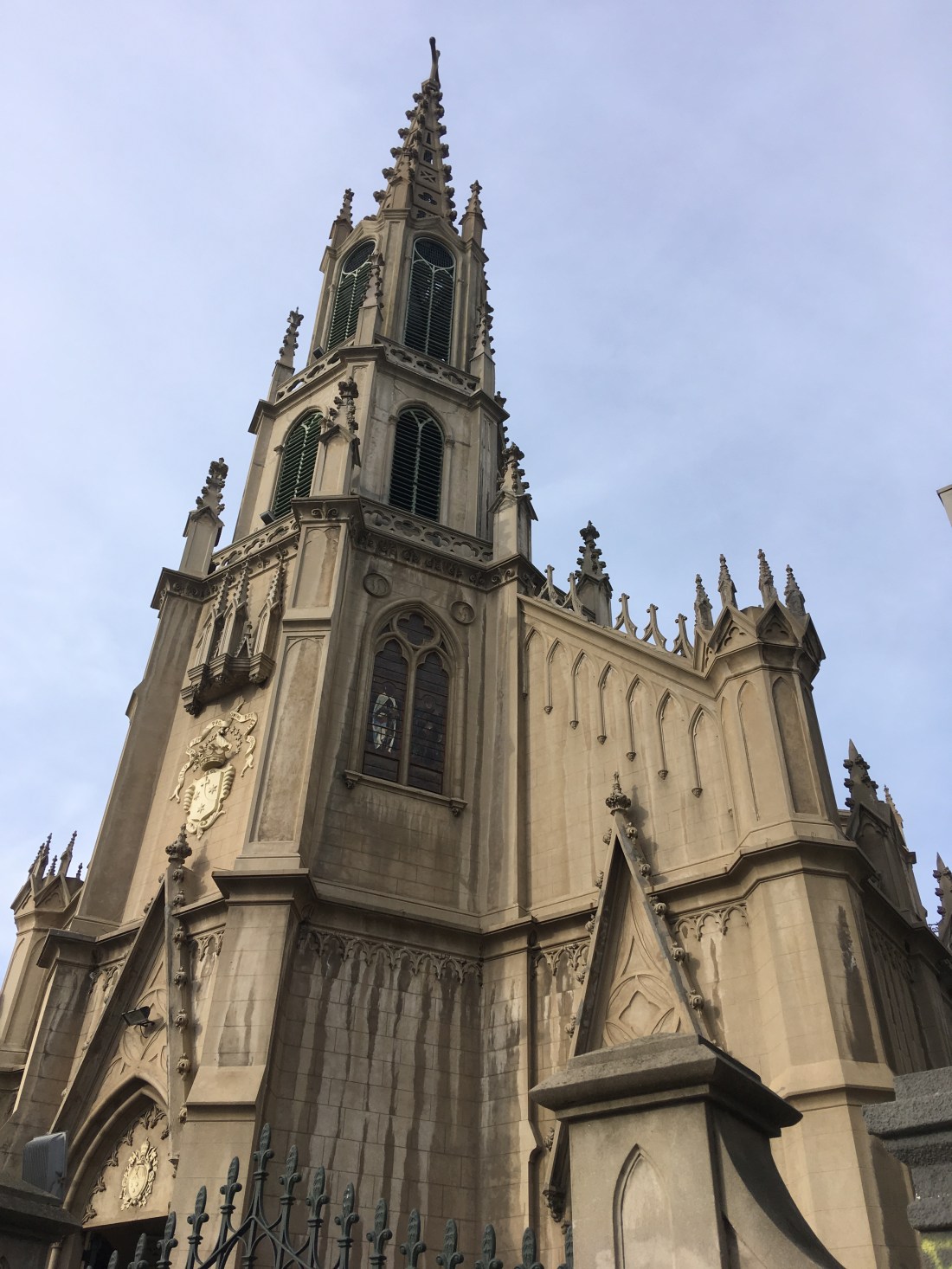
However in Chile, over 70% of the population follow the Roman Catholic Church and thus there are differences between churches in Chile and in Scotland. The first main difference between churches in Scotland and Chile is the decoration. In Scotland, churches have stained glass and maybe one or two crosses inside, but there are no statues or ornate paintings. However in Chile, there are many statues, mostly of Jesus, the Virgin Mary and the saints. Many light candles as offerings and pray towards them.

There are also many differences in worship. In Scotland, services normally consist of hymns, prayers and some sermons or readings. When you enter the church, you are often given an order of service or a hymn book with the pages of the hymns being shown at the front. In Chile however, it is liturgical whereby people know the songs they are singing for each mass. Most of the singing in the Chilean churches is antiphonal, whereby either the Priest or a Cantor begins and the congregation responds. to some extent, it reminded me of a Free Presbyterian services, apart from the fact that the Catholic Church in Chile has an organ whilst musical instruments are not used in Free Church services. Many of the prayers in Chile are done kneeling whilst this does not happen in Scottish churches.

I expected there to be obvious differences, but what I realised is that we have more commonalities than differences. This occurred to me when at mass last Sunday, the priest gave a sermon on The Feeding of the Five Thousand, when Christ managed to feed five thousand people from five loaves of bread and two fishes. The priest was trying to convey the message of sharing and being thankful. The Feeding of the Five Thousand is one of the most well-known Bible stories in Scotland and similar sermons would be given at churches in Scotland. As it was a Catholic mass, I expected there to be some Latin either written or spoken but there was none and the whole service was conducted in the local language, as is the practice in churches in Scotland. Many of the prayers and content of the hymns were also similar and the Lord’s Prayer was also said. This made me feel both happy and sad at the same time, the latter due to the amount of conflict that has existed between Catholics and Protestants for centuries, from the start of the Reformation triggered by Luther’s 95 Theses to sectarian divisions that have arisen in Scotland, most notably in Glasgow.

Having seen Scottish Protestant services and Chilean Roman Catholic masses, two countries on opposite ends of the globe with different interpretations of Christianity, I realise that we must focus on what unites us, not divides us. Only then can we make the world a better place to live.


Sunsets, Neruda and the First Class of the Semester

This week I had my first class at PUCV. The class was called ‘Gramatica para Los Extranjeros’ (Grammar for Foreigners). Despite the majority of the class being Americans, for me, it turned into Spanish grammar for foreigners combined with French spoken practice as there were quite a few French students in the class. I heard quite a few accents from the Breton accent to the accent of the Paris Banlieues (French for Suburbs). What struck me about the class is that the majority of the students when speaking Spanish preferred to speak in the accent they would use for their native language. This is perhaps a big difference from foreign language teaching at Heriot-Watt University compared to other universities across the world.

I cannot tell you how amazing watching the sunsets here are. Although I had previously attached a picture of the sun setting on the beach, the sunset Holly and I witnessed at the weekend was simply incredible. The sun was deep-red colour and the sunset so quickly you could see the sun literally moving beyond the horizon. I wish I had a video to capture it, but I believe it would not do it justice.

Holly and I watched the sunset with over an ice-cream each. In Scotland, you normally have to choose between a cone or a cup but in Chile, a cone with ice cream tipped upside down into a cup is normal and as many politicians on the ‘No’ side of the 2014 Scottish Independence Referendum said, ‘The best of both worlds’. I had two flavours not found often in Scotland, chocolate orange and mascarpone. Although to many mascarpone ice cream seems bizarre, it was actually very nice and reminded me of when in China when I tried Taro flavoured ice-cream (Taro being a tropical plant and root vegetable) and I ended up having it everytime we stopped for ice-cream in China after that.

I also went with Charlotte to see the former residence of one of Chile’s most famous icons, Pablo Neruda. I watched a Chilean film about Neruda before I arrived so I was curious to find out more about him. Being both a poet and diplomat, Neruda was awarded the Nobel Peace Prize for Literature in 1971 and has served as a diplomat representing Chile in Argentina, Spain and Mexico. Neruda’s house is located high up the hills of Valparaiso, which has some incredible views over the Valpo area and the Pacific Ocean. (A picture of the view has been attached in this blog) However, the house is very thin and one can feel claustrophobic quite easily! Neruda was quite a collector, collecting items such as antique maps, paintings, including one of Thomas Cochrane mentioned in the previous blog, bottles of whisky and wine. He died of heart failure however in 1973, shortly after receiving cancer treatment. However, this coincided with the 1973 Coup d’État, when Augusto Pinochet and the military junta seized power and many suspect he was assassinated on Pinochet’s orders due to Neruda’s influence and communist views.

I end the blog with a passage from one of Pablo Neruda’s most famous poems, Muere Lentamente (‘Die Slowly’, in English):

He who does not travel, who does not read,
who does not listen to music,
who does not find grace in himself,
she who does not find grace in herself,
dies slowly.