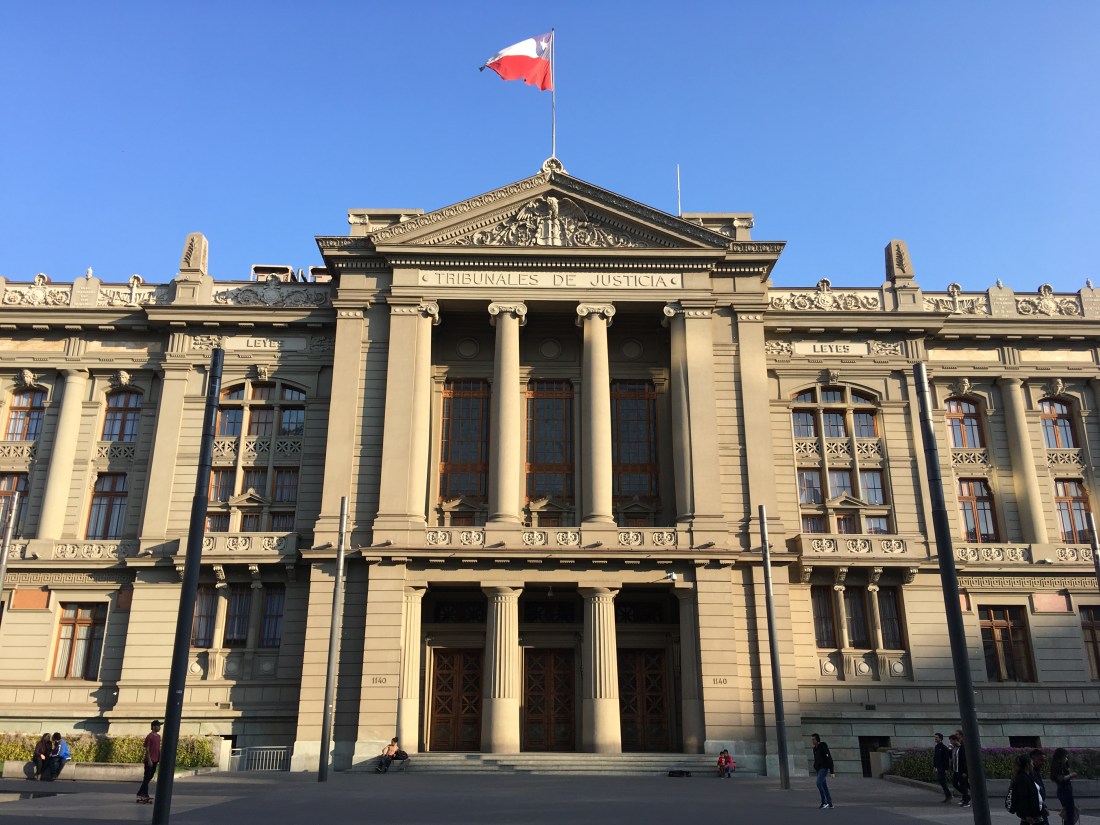
¡Felices Fiestas Patrias!

First and foremost, I would like to apologize for the lack of uploading recently! I have been super busy with tests and sorting out documentation.

All over Chile, celebrations for Fiestas Patrias are officially underway. Fiestas Patrias is when Chile celebrates its independence from Spain in 1810. Although festivities begin one or two weeks in advance, the two main days of the holiday being the 18th and 19th of September. The 18th commemorates Chile’s proclamation of independence whilst the 19th commemorates Chile’s Armed Forces. It is widely viewed as the biggest holiday in Chile and many Chileans travel back home to be with friends and family. Homes and businesses are usually decorated in red, white and blue and by law must have a Chilean flag visible outside, with fines in place for those who do not. However, this law is often not enforced.

A common place for Chilean’s to spend time during Fiestas Patrias is at La Fonda, outdoor venues where Chileans relax and enjoy local music, food and drink and Cueca. Cueca is the national dance of Chile which involves women dressing up in traditional flowery dresses and men wearing boots, ponchos and wide-brim hats. The couples do not have physical contact with one another, but instead wave a white handkerchief or rag. I got to experience Cueca at La Fonda organised by the university on the Friday. Despite the dances being very different, it reminded me of Country Dancing in Scotland.

During Fiestas Patrias and at Fondas, Chileans generally consume local food and beverages. The most common foods include empanadas, completos (Chilean hot dogs) and meat on skewers known as ‘Anticuchos’. In terms of drink, Chileans drink beer and wine, but also spirits, most notably Pisco, a spirit drink made from distilling fermented grape juice. It is most commonly mixed with Coca-Cola, together known as a ‘Piscola’. The most infamous drink however is known as a ‘Terremoto’, Spanish for earthquake. Terremotos are made from Pipeño, a type of low-grade wine, grenadine, fernet and pineapple ice cream. They are notoriously strong and are not for the faint hearted nor the fast drinker. They are so popular that McDonalds has brought out a Terremoto-flavoured sundae for Fiestas Patrias.

However aside from Terremoto the drink, I have also been experiencing a few literal terremotos. In Chile, tremours happen frequently and although the can seem frightenening at first, it is part of everyday life as Chile lies right next to a fault line and is part of the ‘Pacific Ring of Fire’. Since arriving in Chile, I have experienced four tremours, one of which happened during a class at university. However no one stopped what they were doing and laughed about it afterwards.

Felices Fiestas Patrias to all those celebrating!
A Weekend in Santiago

Last weekend, four of us went to Santiago for the weekend, taking the bus from Viña del Mar and coming back on the Sunday.

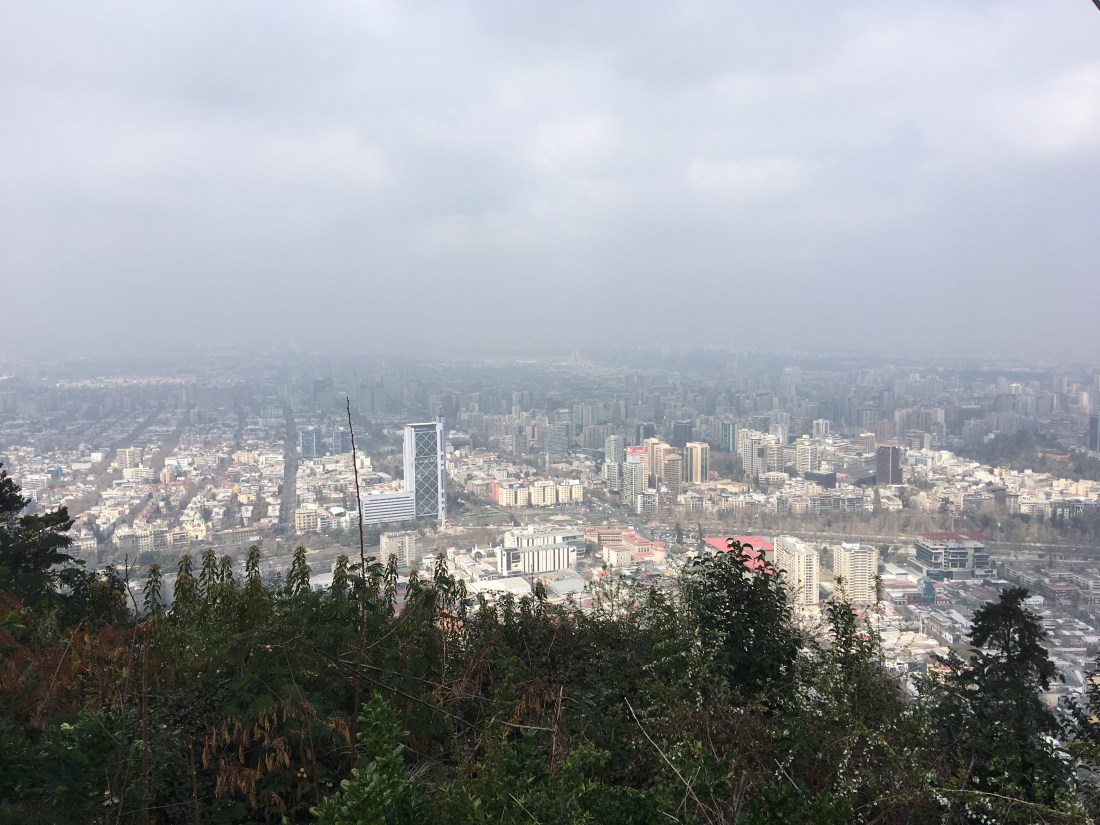
The day started early at 08:30 when we all met at Viña del Mar Bus Terminal and set off for Santiago. The bus took a little longer than expected, taking two hours instead of the projected hour and a half, we slept most of the way. After taking an erratically driven taxi from the bus station in Central Santiago, we arrived at Cerro San Cristobal for some fantastic views of the city. We took the cable car up the hill and took the funicular railway back down, both offering different views of the city. Once up the hill, we realised just how vast and expansive Santiago is, with the city stretching to as far as the eye could see. At the top of the hill, there is a statue of the Virgin Mary with a chapel inside, which reminded me of Christ the Redeemer in Rio de Janeiro.

After taking the funicular back down, we arrived at our hostel which was very nice as we had our own private room with two bunks beds, the room looking like the set for an Ikea advert. I was on the top bunk however, which did not have boards at the side to stop you falling off so I was very thankful there was not an earthquake during the night! Arguably the best thing about the room was that there was heating, a rare occurence in Chilean accommodation.

After checking in at our hostel, we went to a market to eat some seafood. After an injury sustained by one of our group due to an uncovered manhole, we decided to return to the hostel and enjoy our free bottle of wine on the terrace at the hostel. However on the way back to our hostel, we had to dodge a slightly awkward situation when in the middle of one Santiago pedestrianised shopping streets, an elderly woman threw a chair at a man in the street.

The next morning, we set off and went to Pablo Neruda’s Santiago residence, La Chascona. It was a little different to his house in Valpo, with the house in Santiago being more spacious and with more places to enjoy the nice weather. However, I preferred his house in Valpo as the house in Santiago did not offer any good views like his house in Valpo which overlooks the sea.

Our next port of call was the Human Rights Museum in Santiago. The museum told the story of the 1973 Chilean Coup d’État and the crimes committed by Pinochet’s regime up until its collapse in 1990. The most harrowing part of the entire museum was on the top floor, where all the faces of the victims of the regime on the wall, making you realise that the victims of the regime weren’t just numbers, but real people.

Before taking the bus back to Viña, we decided to go to a seafood restaurant near the Museum which was recommended to us by one of our taxi drivers. The restaurant was by far one of the most bizarre, yet wonderful, restaurants I have ever been to in my life. The entire restaurant had a maritime/naval theme, with decorations including naval memorabilia from Chile and around the world to a whale’s skeleton on the ceiling and the waiters dressed in naval uniforms. The food was some of the best seafood I have ever tasted and it was a great way to round off a successful trip to the capital.


Palín

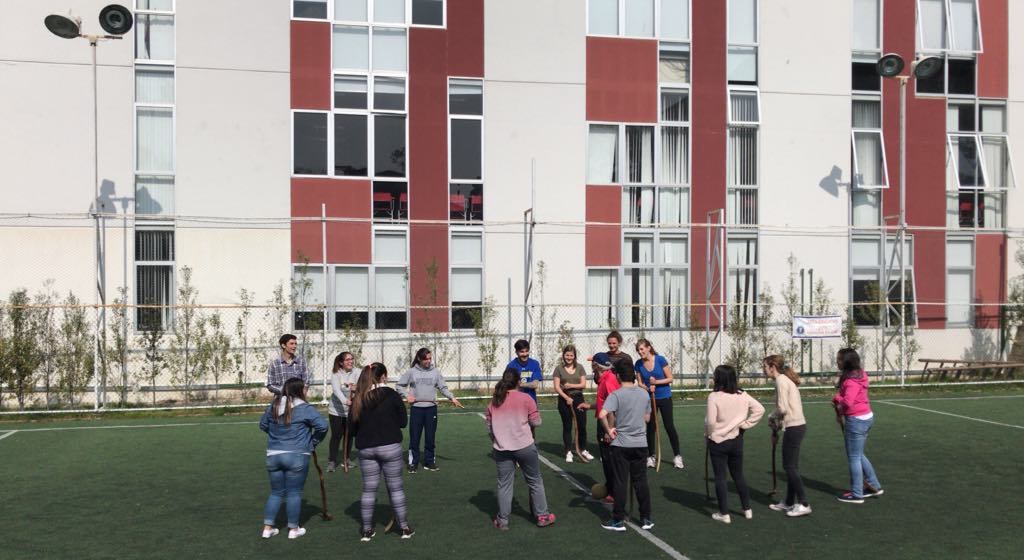
This week we had our first practical class for Mapuche Games, which took place on the university pitch in Viña del Mar. There, we were introduced to the game of Palín.

Palín is one of the games played by the Mapuche in order to settle disputes between tribes. It is widely regarded as one of the pillars of Mapuche culture and much of the terminology used in class is in Mapudungun, the language of the Mapuche. The sport is similar to hockey and shinty and is played with a stick called a ‘weño’ and a ball called a ‘palí’. Teams normally consist of about fifteen players each side and both teams try to take the palí to the other end in order to score a ‘tripay’. The pitch is rectangular and is called a ‘palíwe’.

Unlike most sports such as hockey and shinty, in palín, players begin the match facing each other horizontally in a line across the pitch. A player’s opposite number is called ‘kon’ and they are supposed to be mindful of their opposite number’s family. The game begins when the two captains (always the players in the middle of the line) come out and touch palís four times to the count of ‘kiñe, epu, güla, meli’ (one, two, three, four in Mapudungun) and compete for the palí, much like a bully-off in hockey or a face-off in ice hockey.

Due to the small size of the university pitch, the number of players on each team was seven and we had to take turns to play as the class is quite large. The game could be quite competitive and games frequently turned into a maul of players all swinging their weños trying to get the palí. Due to some of the viciousness, I believe it would be banned in the UK due to health and safety reasons!  I was in a team of seven alongside Holly and Charlotte, my classmates from Heriot-Watt. We played very well as a team and eventually won our game 2-0.

The lesson was a fantastic introduction to the game of Palín and I look forward to our next class next Tuesday with the great excitment. We all said to each other at the end that it was like nothing we have ever done before and that it was great to try something new and learn about a completely new culture.

Mari Mari!

(Photo credits go to Holly)


First Week of Classes

After weeks of waiting and trying to kill time, the classes finally began last Monday. Unlike previous first days back, I felt ready for the start of classes.

My current programme consists of six subjects (known as ‘ramos’ in Chilean Spanish). They are Spanish Language, Development of Interpreting and Translation Abilities, Translation Technology, Professional Aspects of Translation and Interpreting, Mapuche Games and Grammar for Foreigners which started three weeks ago. Classes in Chile last an hour and a half as opposed to an hour in Scotland, and the day starts at 08:15. I have three classes that start at 08:15, which requires a six o’clock alarm and a few cups of yerba maté in order to warm and wake up!

On Monday, my day started at 08:15 with the first class being Spanish Language. The speed of the Spanish instruction was daunting and linguistic jargon was frequently used. However, when I read over the sheet after class, I realised that it was not actually that dissimilar to the textual analyses I have done in Scotland, albeit in Spanish.

Later that afternoon, I had my first class of Translation Technology. Although on the first day the only activity we did was the popular ice-breaker, ‘two truths and a lie’, we had our first assignment on the Friday. We had to edit a translated document to fit certain formats, including font and size and editing the colour to a specific number of the colour wheel. I found it rather like completing a model kit in Spanish!

My two other 08:15 starts are both Development of Translation and Interpreting Abilities. The classes involved summarising articles in the other language and some quickfire interpreting practice of single words. However, the most exciting and bizarre thing that happened was on Wednesday when as I looked up, I saw a dog lying under a desk in the classroom, something not seen at Heriot-Watt I can assure you! However, I do not blame the dog as it was perishing outside at the time!

Professional Aspects of Interpreting and Translating was taken by one of the most memorable lecturers/teachers I have ever encountered. He had tattoos up and down his arm and came into the class listening to punk rock on his Classic iPod. He was hilarious however as when someone asked what language the classes and coursework would be in, he responded by saying Swahili, which gave me fits of the giggles for the rest of the day. However, the whole class was stunned when he told us he had subtitled two episodes of Game of Thrones!

My favourite class however was Mapuche Games, the Mapuche being the native people in Chile before the Spanish arrived. Instead of fighting each other, the Mapuche would play sports to settle disputes and the class teaches us the sports played by the Mapuche and other aspects of the Mapuche Culture. The class involved our lecturer whom I presume to be in his seventies, telling us how to play the game. He sort of reminded me of a grandfather in many respects and brought back memories of my Papa teaching me how to play Golf when I was younger.

In general, it has been a fulfilling, but busy week. One thing I do like is that the Chilean students are quite happy come up and speak to us. It is often the case in many countries that home and exchange students do not mix but this is not the case in Chile. As there are virtually no other exchange students on our course expect the three of us from Heriot-Watt, it definitely makes me feel at home.

Everton de Viña vs Huachipato

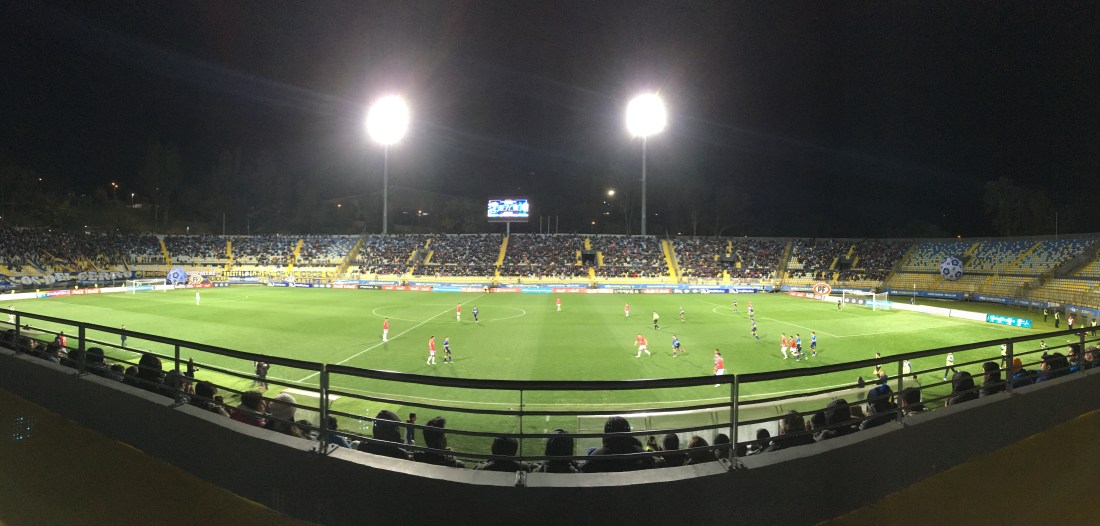
On Saturday, I decided to go to Mall Marina and buy a ticket for my first Chilean football match between local team Everton de Viña and Huachipato, who play near Concepcion, the third largest city in Chile. I was quite nervous as it was the first football match outside of Scotland and England that I had ever been to in person.

I initially arrived at the wrong part of the ground due to the taxi driver dropping me off at the wrong gate. When I go through the gate, I realised that by mistake, I was in the section with Everton’s Ultras, Los del Cerro! However, a helpful steward let me through the barrier into my section which ran along the side of the pitch.

The story of the match was surprising as although Everton were bottom of the league and Huachipato in mid-table, Everton for the majority of the match were by far the better side. They played a very nice style of football, playing both long balls mixed with some fluid passing and tiki-taka. Despite their dominance, Everton were unable to convert their chances, the closest being a chip over the Huachipato goalkeeper which ricocheted off the upright. Huachipato also had their chances and would have scored had it not been for a brilliant goal-line clearance by an Everton defender. With both sides missing key opportunities, the match ended in a 0-0 draw. The game was a feisty affair however as both sides finished the game with ten men.

The atmosphere was unlike anything I have ever witnessed before. The noise coming from the end occupied by Los del Cerro was incredible. They had banners, flags, trumpets and samba drums and the singing was constant. I noticed that the atmosphere got louder as the game went on, particularly at the end when the fourth official allotted five minutes of added time at the end of the second half. The songs started by Los del Cerro eventually spilled over into other parts of the ground and there were several moments when the whole stadium was a wall of noise. The passion displayed by the fans was immense and they do not hold back on voicing their opinions. Every decision that went against Everton would cue a tirade of passionate outbursts directed at the officials and any set-piece taken by Huachipato goalkeeper which took a while to complete was met with a chorus of whistles.

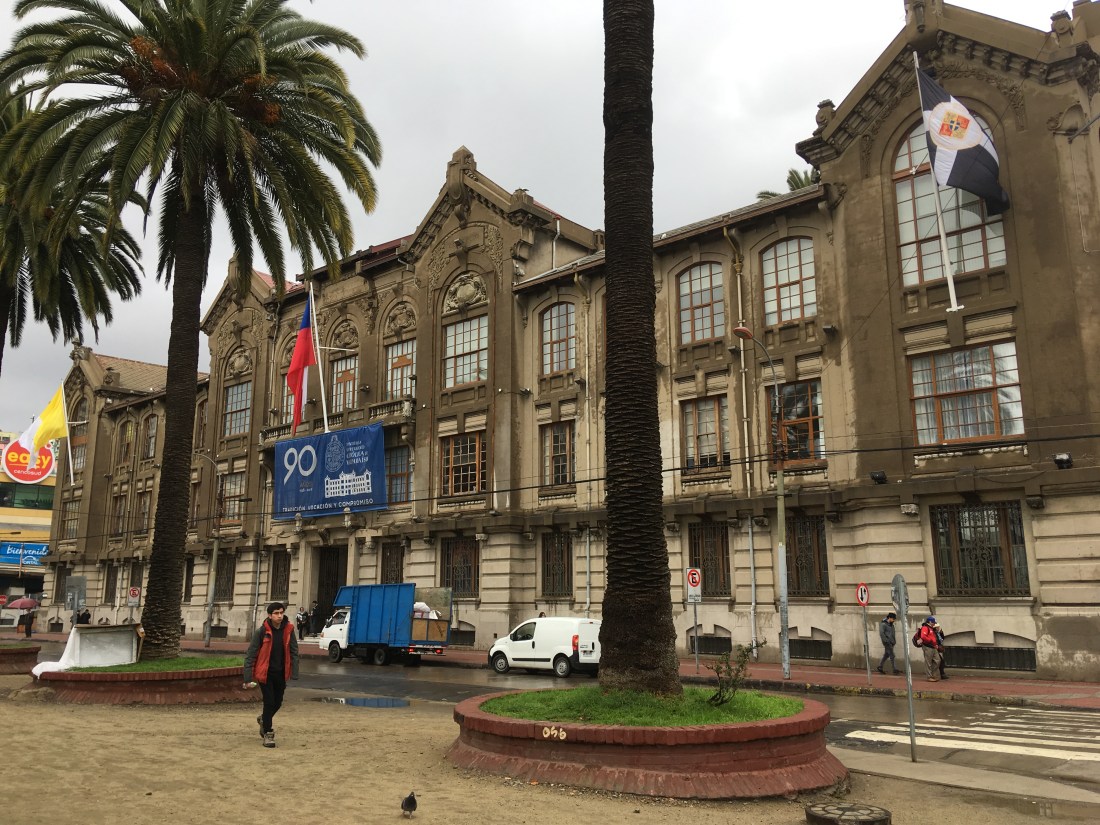
Everton’s stadium, Estadio Sausalito, was refurbished for the 2015 Copa América and is therefore quite modern, with good seating and facilities. The stadium stands on the opposite side to the Sausalito Lagoon, facing the Translation and Interpreting Faculty at the PUCV Viña Campus. This meant that the surroundings were vaguely familiar, though it did take me a while to figure out exactly how to get out of the ground! At half-time, fans dash to the food and drink kiosk for a cup of tea/coffee and a packet of biscuits. Others bought sandwiches that were packaged in the same way that those in Marks & Spencer are in the UK. Getting served however is almost identical to trying to buy a drink in a bar/nightclub. It requires a fair amount of jockeying and force as queuing is non-existent!

All in all, it was a terrific, pulsating and fascinating experience. I hope to go again to watch another great game of football.

¡Vamos el Oro y Cielo!


The Lord’s Day

I write this on Saturday but many of you may be reading this on Sunday which for Christians across Chile and the world, is the day reserved for rest and worship.

In Scotland, I have been to three types of church services, Church of Scotland, the largest church in Scotland, Episcopalian and Free Presbyterian, all of which are Protestant denominations. My family is traditionally Church of Scotland but nowadays, I tend to call myself Christian only, thus not identifying with a particular denomination and I will happily attend any church no matter the denomination.

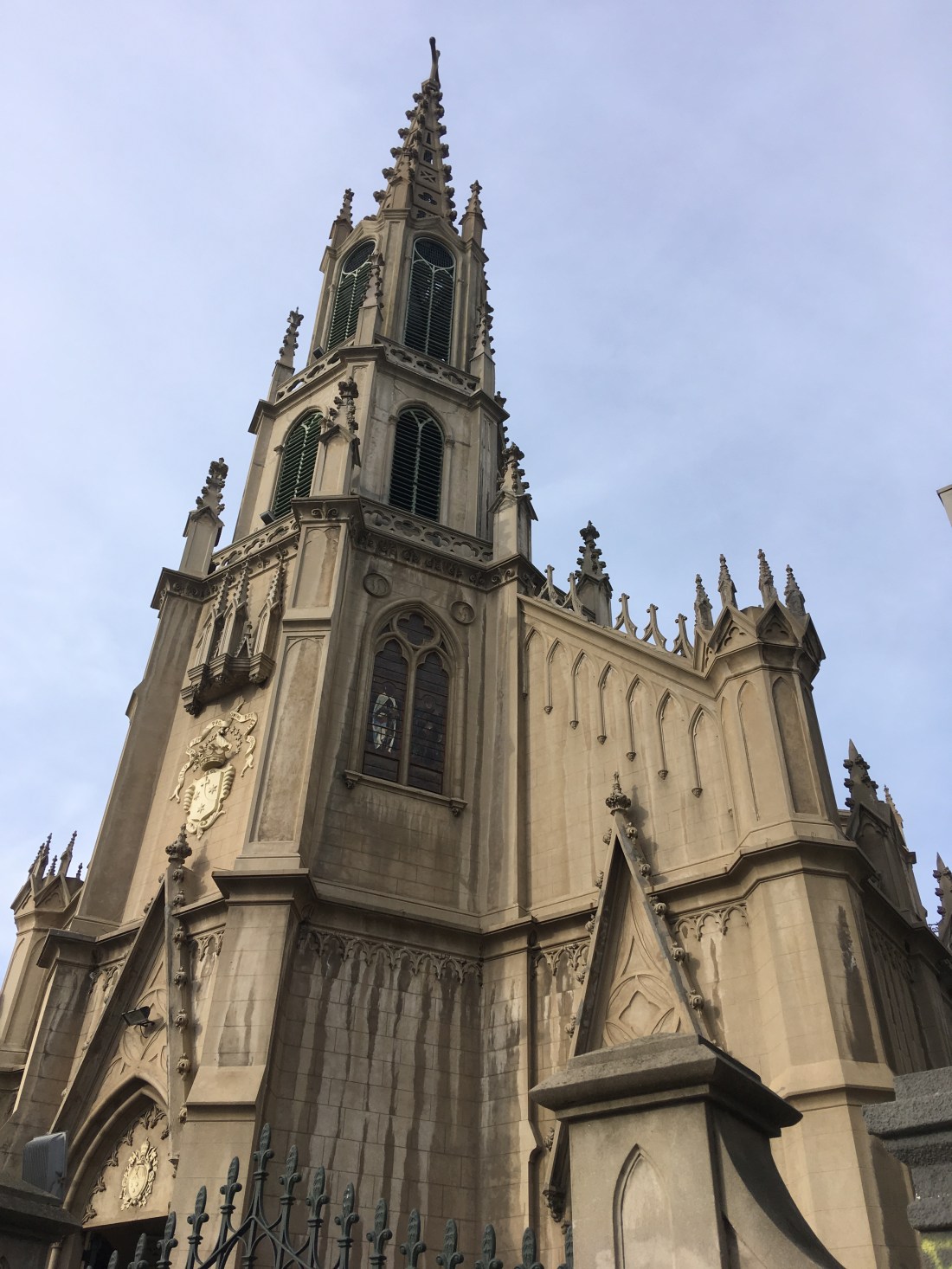
However in Chile, over 70% of the population follow the Roman Catholic Church and thus there are differences between churches in Chile and in Scotland. The first main difference between churches in Scotland and Chile is the decoration. In Scotland, churches have stained glass and maybe one or two crosses inside, but there are no statues or ornate paintings. However in Chile, there are many statues, mostly of Jesus, the Virgin Mary and the saints. Many light candles as offerings and pray towards them.

There are also many differences in worship. In Scotland, services normally consist of hymns, prayers and some sermons or readings. When you enter the church, you are often given an order of service or a hymn book with the pages of the hymns being shown at the front. In Chile however, it is liturgical whereby people know the songs they are singing for each mass. Most of the singing in the Chilean churches is antiphonal, whereby either the Priest or a Cantor begins and the congregation responds. to some extent, it reminded me of a Free Presbyterian services, apart from the fact that the Catholic Church in Chile has an organ whilst musical instruments are not used in Free Church services. Many of the prayers in Chile are done kneeling whilst this does not happen in Scottish churches.

I expected there to be obvious differences, but what I realised is that we have more commonalities than differences. This occurred to me when at mass last Sunday, the priest gave a sermon on The Feeding of the Five Thousand, when Christ managed to feed five thousand people from five loaves of bread and two fishes. The priest was trying to convey the message of sharing and being thankful. The Feeding of the Five Thousand is one of the most well-known Bible stories in Scotland and similar sermons would be given at churches in Scotland. As it was a Catholic mass, I expected there to be some Latin either written or spoken but there was none and the whole service was conducted in the local language, as is the practice in churches in Scotland. Many of the prayers and content of the hymns were also similar and the Lord’s Prayer was also said. This made me feel both happy and sad at the same time, the latter due to the amount of conflict that has existed between Catholics and Protestants for centuries, from the start of the Reformation triggered by Luther’s 95 Theses to sectarian divisions that have arisen in Scotland, most notably in Glasgow.

Having seen Scottish Protestant services and Chilean Roman Catholic masses, two countries on opposite ends of the globe with different interpretations of Christianity, I realise that we must focus on what unites us, not divides us. Only then can we make the world a better place to live.